


Table of Contents
- Standard Plywood Sheet Sizes for Wholesale Buyers
- Plywood Sheet Sizes Wholesale: 1220×2440mm vs 1250×2500mm
- When Should You Choose Custom Plywood Sheet Sizes?
- How to Choose Plywood Supplier Standard Sizes
- How Plywood Size Affects Container Loading and Landed Cost
- What Plywood Thickness Should You Buy With Wholesale Sheet Sizes?
- What Should You Put in a Wholesale Plywood RFQ?
- How to Compare Wholesale Plywood Suppliers
- Standard or Custom Plywood: Which Is Better for B2B Buyers?
- Why Buy Wholesale Plywood Directly From a Manufacturer?
- Frequently Asked Questions About Wholesale Plywood Sizes
- Final Takeaway: Buy Plywood by Specification, Not Just by Size
Introduction: Why Plywood Sheet Size Matters in Wholesale Buying
When buying plywood by the container, sheet size is more than a simple product specification.
For a project contractor, furniture manufacturer, distributor, or importer, the wrong plywood dimensions can increase cutting waste, affect production efficiency, complicate warehouse handling, and reduce container utilization.
That is why professional buyers should compare plywood sheets wholesale sizes based on the complete purchasing requirement rather than looking only at the lowest price per sheet.
Common specifications include 1220×2440mm, 1250×2500mm and 1250×3000mm, while custom plywood sizes may be available for larger B2B orders. Dongstar’s current plywood range also supports customized sheet dimensions depending on product type and specification.
For wholesale buyers, the real question is not simply “What is the standard plywood size?”
It is:
Which plywood sheet size gives the best combination of material utilization, production efficiency, logistics and total landed cost?
Standard Plywood Sheet Sizes for Wholesale Buyers
The most familiar plywood format in international markets is the nominal 4×8 sheet, approximately 1220×2440mm.
For B2B purchasing, several common dimensions are worth comparing:
| Plywood Sheet Size | Approx. Area | Typical B2B Applications |
|---|---|---|
| 1220×2440mm | 2.98 m² | Construction, furniture, cabinets, general use |
| 1250×2500mm | 3.13 m² | Furniture, construction, interior applications |
| 1250×3000mm | 3.75 m² | Large panels, projects, specialized applications |
| Custom sizes | Project dependent | OEM production and specific cutting requirements |
These dimensions are not universal standards for every plywood factory. Availability depends on the plywood type, manufacturing equipment, veneer availability, market requirements and order quantity.
Dongstar currently lists 1220×2440mm, 1250×2500mm and 1250×3000mm as available plywood sizes, together with customized dimensions.
For wholesale purchasing, always confirm the finished sheet dimensions and permitted tolerance before placing a production order.
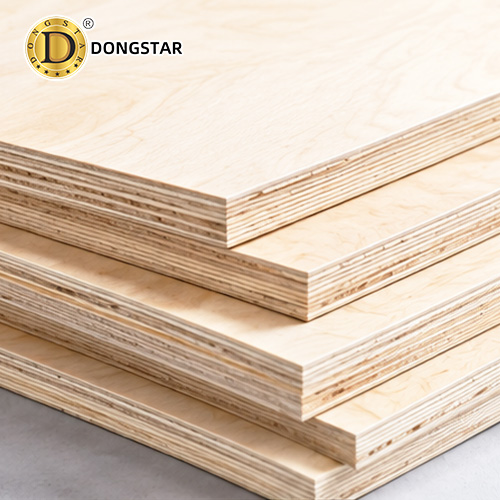
Plywood Sheet Sizes Wholesale: 1220×2440mm vs 1250×2500mm
For many international buyers, the most common comparison is between 1220×2440mm and 1250×2500mm plywood.
The difference may look small, but it can matter when purchasing thousands of sheets.
A 1220×2440mm sheet is approximately equivalent to the familiar 4×8 format. It is widely recognized by construction companies, furniture manufacturers and distributors.
A 1250×2500mm sheet provides slightly more panel area and may be better suited to some metric-based production systems.
However, the larger sheet is not automatically the better choice.
Before switching from one size to another, buyers should check:
- CNC cutting programs
- Production line dimensions
- Storage rack dimensions
- Pallet configuration
- Container loading
- Installation requirements
- Cutting waste
- Final customer specifications
For a furniture factory, for example, a slightly larger sheet may create more waste if the cutting layout is optimized for 1220×2440mm.
The cheapest plywood sheet is not always the cheapest plywood solution.
When Should You Choose Custom Plywood Sheet Sizes?
Standard sizes are usually the easiest option for wholesale purchasing, but custom plywood sheets can make sense when the project has specific dimensional requirements.
A plywood manufacturer custom sizes program can be useful for:
- Large construction projects
- Furniture production
- CNC machining
- Industrial components
- Special packaging
- Large wall or ceiling panels
- Formwork applications
- OEM plywood programs
Custom dimensions can reduce secondary cutting and may improve material utilization when the plywood is being processed repeatedly in a factory.
However, custom production usually requires more detailed planning.
The buyer should confirm:
- Required length and width
- Thickness
- Dimensional tolerance
- Face and back grade
- Core material
- Glue type
- Moisture requirement
- Packaging method
- Minimum order quantity
- Production lead time
Custom plywood should therefore be treated as a manufacturing specification rather than simply a different product size.
How to Choose Plywood Supplier Standard Sizes
When comparing a plywood supplier standard sizes offer, do not compare dimensions alone.
Two suppliers may quote the same 1220×2440×18mm plywood but provide different products.
The following specifications should be checked:
| Specification | What B2B Buyers Should Confirm |
|---|---|
| Length & Width | Exact finished dimensions |
| Thickness | Nominal thickness and tolerance |
| Core | Birch, eucalyptus, poplar, pine, combi or required material |
| Face/Back | Required veneer and grade |
| Glue | MR, WBP, phenolic or specified system |
| Surface | Sanded, unsanded, film faced or decorative |
| Moisture | Required range for destination market |
| Certification | FSC, CE or other applicable documents |
| Packaging | Export packing and pallet requirements |
| Quantity | Sheets, pallets or containers |
Dongstar’s current plywood specification lists different face/back veneers, multiple core options, several glue systems and thicknesses from approximately 2.7mm to 40mm depending on product configuration.
This is why a professional RFQ should specify the complete plywood construction rather than asking only for “wholesale plywood price.”
How Plywood Size Affects Container Loading and Landed Cost
For importers, plywood dimensions directly influence logistics.
A change in sheet size can affect:
- Sheets per pallet
- Pallet footprint
- Container utilization
- Total shipment weight
- Warehouse space
- Handling requirements
- Freight cost per sheet
Thickness matters as well.
For example, the number of 6mm plywood sheets that can be loaded into a container is very different from the number of 18mm sheets.
The same applies to customized dimensions.
A supplier may be able to manufacture a special sheet size, but the buyer should ask for a proposed loading plan before confirming the order.
For large-volume procurement, the relevant calculation is not simply:
Plywood price per sheet
It is closer to:
Product cost + packaging + freight + duty/tax + handling + cutting waste = total landed cost
This is particularly important when comparing different plywood sheet sizes wholesale offers.
What Plywood Thickness Should You Buy With Wholesale Sheet Sizes?
Sheet size and thickness should be specified together.
Common plywood thicknesses include approximately 3mm, 6mm, 9mm, 12mm, 15mm and 18mm, while thicker specifications can also be produced depending on the product.
Typical applications include:
- 6mm: cabinet backs, lightweight panels and interior components
- 9–12mm: furniture components, partitions, packaging and interior applications
- 15mm: furniture, flooring and applications requiring additional rigidity
- 18mm: furniture, cabinets, flooring, construction and heavier-duty applications
- 21–25mm+: applications requiring greater thickness and stiffness
The correct thickness depends on the load, span, construction method, support spacing and applicable technical requirements.
Do not assume that a thicker plywood sheet is automatically a better product.
For bulk buyers, the correct specification is the one that meets the application without adding unnecessary material cost or shipping volume.
What Should You Put in a Wholesale Plywood RFQ?
A good RFQ allows several suppliers to quote the same product.
Instead of sending:
“Please quote 18mm plywood.”
Use a specification such as:
Product: Commercial Plywood
Size: 1220×2440mm
Thickness: 18mm
Face/Back: BB/CC
Core: Poplar or hardwood
Glue: MR or WBP
Surface: Double-sided sanded
Quantity: 1×40HQ
Packaging: Export standard
Destination: [Port/Country]
Certification: [Required certification]
For a custom order, add:
Custom Size: [Length] × [Width]mm
Tolerance: [Required tolerance]
Cutting Requirement: [If applicable]
This format makes supplier quotations easier to compare and reduces misunderstandings during production.
How to Compare Wholesale Plywood Suppliers
Price is important, but it should not be the first and only selection factor.
When evaluating a plywood manufacturer or supplier, consider:
Manufacturing Capability
Can the factory consistently produce your required size, thickness and core construction?
Quality Consistency
Can the supplier maintain the same specification across repeat shipments?
Custom Production
If your project requires non-standard dimensions, can the manufacturer produce them at commercial quantities?
Export Experience
Does the supplier understand export packaging, container loading and destination-market documentation?
Quality Control
Can the supplier provide production samples, inspection support and technical specifications?
Long-Term Supply
For wholesalers and distributors, consistency between orders is often more valuable than a small difference in the first quotation.
Dongstar’s product portfolio covers commercial, furniture, hardwood, construction and waterproof plywood, with standard and customized sheet sizes listed for its plywood range.
Standard or Custom Plywood: Which Is Better for B2B Buyers?
There is no universal answer.
Choose standard plywood sizes when:
- Your cutting plans already use common sheet dimensions
- You need flexible replacement supply
- You purchase mixed containers
- Your market commonly sells 4×8 or metric standard panels
- You want a simpler and faster procurement process
Consider custom plywood sizes when:
- Your factory has a fixed cutting layout
- Standard sheets create significant waste
- You need larger panels
- Your project has unique dimensions
- You purchase regular container volumes
- The supplier can maintain the required tolerance
For most importers, standard sizes are the safest starting point. For large OEM programs, however, custom sizing can sometimes reduce total production cost.
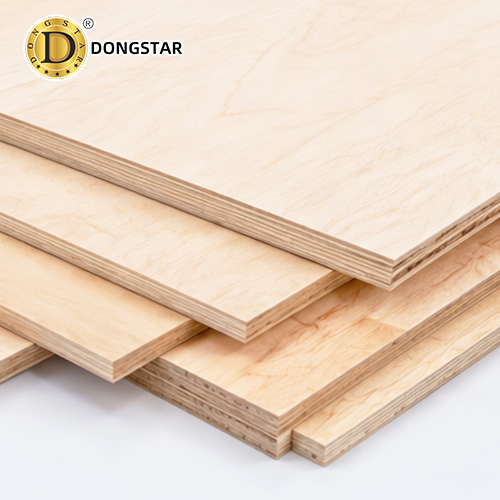
Why Buy Wholesale Plywood Directly From a Manufacturer?
For large B2B orders, buying directly from a plywood manufacturer can provide more control over specifications.
A direct manufacturer relationship can make it easier to discuss:
- Custom sheet sizes
- Thickness requirements
- Core construction
- Face and back grades
- Glue systems
- Packaging
- Container loading
- Quality inspection
- Repeat production
Dongstar’s official plywood page positions the company as a China-based plywood manufacturer, supplier and exporter serving global B2B projects, wholesalers, importers and manufacturers.
For buyers purchasing several containers per year, the goal should be more than obtaining a one-time low price.
A reliable supplier should be able to reproduce the agreed specification shipment after shipment.
Frequently Asked Questions About Wholesale Plywood Sizes
What are the most common plywood sheet sizes for wholesale?
1220×2440mm is one of the most widely recognized formats. Other common B2B sizes include 1250×2500mm and 1250×3000mm, depending on the product and supplier.
Can a plywood manufacturer make custom sizes?
Yes. Some manufacturers can produce custom plywood dimensions for bulk orders, subject to product type, production capability and minimum order requirements.
Is 1220×2440mm the same as 4×8 plywood?
1220×2440mm is commonly used as the metric equivalent of nominal 4×8 plywood. Buyers should still confirm the actual finished dimensions and tolerance with the supplier.
Which plywood size is best for furniture manufacturing?
It depends on the furniture design and cutting plan. 1220×2440mm and 1250×2500mm are common choices, but a custom size may reduce cutting waste for high-volume production.
Can I order custom plywood thickness and size together?
In many cases, yes. A manufacturer can potentially combine a specific sheet size with a required thickness, core, face/back grade and glue system. Confirm production feasibility and MOQ before ordering.
How should I compare plywood suppliers?
Ask all suppliers to quote the same size, thickness, tolerance, core, face/back grade, glue, packaging and quantity. This creates a meaningful price comparison.
Does plywood sheet size affect container cost?
Yes. Sheet dimensions influence pallet configuration, container utilization, warehouse handling and freight cost per sheet.
What information should I send when requesting a wholesale plywood quotation?
Provide product type, size, thickness, core, face/back grade, glue, surface treatment, quantity, packaging, destination and required certifications. For custom plywood, also specify dimensional tolerance.
Final Takeaway: Buy Plywood by Specification, Not Just by Size
For global project buyers, wholesalers and importers, choosing the right plywood sheet size is ultimately a purchasing decision rather than a simple measurement question.
1220×2440mm, 1250×2500mm and 1250×3000mm are useful standard formats, while custom plywood dimensions can provide another option for OEM and large-volume projects. Dongstar currently lists these sizes and custom dimensions within its plywood range.
Before placing a wholesale order, compare:
- Sheet dimensions
- Thickness
- Dimensional tolerance
- Core material
- Face/back grade
- Glue system
- Certification
- Packaging
- Container loading
- Total landed cost
The right plywood supplier is not simply the supplier offering the lowest price.
It is the supplier that can consistently produce the right plywood specification, in the right size, at the right volume, with predictable quality and delivery.
For serious B2B procurement, start with the specification. Then compare the price.
Recommended Reading from Dongstar Blog
- What is Plywood? Complete Guide for Importers in 2026
- How Thick Is 3/4 Inch Plywood in mm? 1/2″ & 5/8″ Guide
- 1220×2440mm vs 1250×2500mm Plywood: Size Guide for Buyers
- 12mm vs 18mm Plywood: Which Thickness Should You Choose?
- Standard Plywood Sheet Sizes: 4×8, 1220×2440mm & More | 2026 Guide
- Plywood Sizes & Thickness: Standard Sheet Dimensions Guide 2026
- OSB vs Particle Board: 2026 Comparison for Global Buyers | China Supplier Guide
- 7/16 OSB Board Weight and 7/16 OSB Price Guide 2026 | OSB Supplier China
Post time: Sep-07-2026