

Table of Contents
- 1220×2440mm vs 1250×2500mm Plywood: The Quick Answer
- What Is the Difference Between 1220×2440 and 1250×2500 Plywood?
- 1220×2440 Plywood: The 4×8 Sheet Size
- 1250×2500 Plywood: A Common Metric Format
- Plywood Sheet Dimensions Compared
- Which Plywood Size Is Better for European Projects?
- How Sheet Size Affects Plywood Price
- Weight, Storage and Container Loading
- How to Choose the Right Plywood Dimensions for Your Project
- Why Cutting Plans Matter for Bulk Orders
- What Should Buyers Specify on a Plywood RFQ?
- Buying 1220×2440mm and 1250×2500mm Plywood from China
- Why Work With an Experienced Plywood Supplier?
- Frequently Asked Questions
- Final Recommendation for B2B Buyers
1220×2440mm vs 1250×2500mm Plywood: Size Guide for Buyers
If you’re buying plywood by the container, sheet dimensions are not a minor detail.
A difference of just a few centimeters can change the usable panel area, cutting layout, pallet configuration, warehouse requirements and even the number of sheets needed for a project.
Two dimensions that frequently come up in international plywood sourcing are 1220×2440mm plywood and 1250×2500mm plywood.
The first is closely associated with the familiar 4×8 plywood sheet. The second is a metric format commonly encountered in European and other international markets.
So, which one should a project buyer choose?
The short answer is: choose the size that best matches your project’s design, cutting plan and local market requirements.
For bulk buyers, the cheapest sheet isn’t necessarily the cheapest option. A slightly larger sheet may reduce joints or cutting waste. On the other hand, if your machinery and product dimensions are already designed around 1220×2440mm, switching sizes could create unnecessary waste.
This guide compares the two formats from a practical purchasing perspective.
1220×2440mm vs 1250×2500mm Plywood: The Quick Answer
Both are widely useful plywood sheet formats, but they serve slightly different purchasing needs.
| Specification | 1220×2440mm | 1250×2500mm |
| Width | 1.22 m | 1.25 m |
| Length | 2.44 m | 2.50 m |
| Approx. sheet area | 2.977 m² | 3.125 m² |
| Difference in area | — | About 4.98% larger |
| Common association | 4×8 sheet | Metric format |
| Typical use | Furniture, construction, general panels | Furniture, construction, European/international projects |
| Handling | Slightly lighter at same thickness/density | Slightly heavier at same thickness/density |
| Best for | Projects designed around 4×8 | Projects designed around metric dimensions |
The 1250×2500mm sheet provides approximately 4.98% more surface area than a 1220×2440mm sheet.
That sounds attractive, but more area doesn’t automatically mean better value.
The right comparison is based on cost per usable square meter after cutting waste, not simply cost per sheet.
What Is the Difference Between 1220×2440 and 1250×2500 Plywood?
The dimensional difference is straightforward.
A 1220×2440mm sheet is:
- 1,220mm wide
- 2,440mm long
- Approximately 2.977m² per sheet
A 1250×2500mm sheet is:
- 1,250mm wide
- 2,500mm long
- 3.125m² per sheet
The 1250×2500mm panel is therefore 30mm wider and 60mm longer.
It also has about 0.148m² more surface area per sheet.
For one or two sheets, this difference may not matter much.
For a 20,000-sheet purchasing program, it matters considerably.
At the same thickness and density, the larger sheet also contains approximately 4.98% more material. That means its weight will normally be higher by a similar proportion, although actual weight depends on wood species, moisture, glue content and panel construction.
This is why a professional importer should avoid comparing sheet prices without knowing the exact dimensions.
A $20 sheet isn’t necessarily cheaper than a $21 sheet.
If the $21 sheet has substantially more usable area and produces less cutting waste, it may be the better commercial choice.
1220×2440 Plywood: The 4×8 Sheet Size
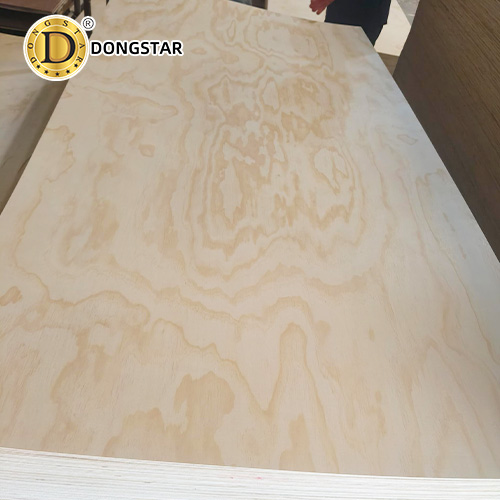
1220×2440 plywood is one of the most familiar sheet formats in international plywood trade.
It is commonly described as a 4×8 sheet because 4 feet × 8 feet converts to approximately 1219×2438mm.
In commercial trade, however, buyers should not assume that “4×8″ always means exactly 1220×2440mm.
The purchase order should state the actual required dimensions.
This distinction matters for CNC processing, automated cutting and projects where tolerances are tight.
1220×2440mm plywood is widely considered when buyers need:
- General construction panels
- Furniture components
- Cabinet components
- Interior wall panels
- Packaging
- Commercial plywood
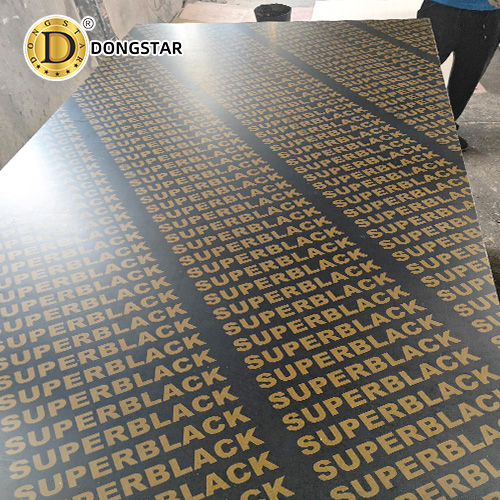
- Film faced plywood
- Other engineered wood applications
For manufacturers already using imperial or 4×8-based product designs, 1220×2440mm can be the simplest option.
It also makes communication easier when customers, contractors and distributors are accustomed to the 4×8 format.
For export purchasing, however, the final specification should always state the dimension in millimeters rather than relying only on the term “4×8.”
1250×2500 Plywood: A Common Metric Format
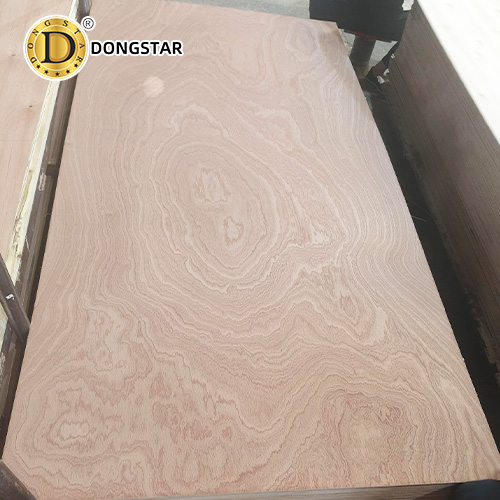
1250×2500 plywood is a useful metric panel format for projects where larger sheet dimensions are preferred.
At 3.125m² per sheet, it offers almost 5% more surface area than 1220×2440mm plywood.
That additional area can be useful for certain furniture and construction components.
For example, if a cabinet manufacturer can place several components onto one 1250×2500mm sheet with fewer offcuts, the larger format may improve material utilization.
But there is a catch.
A larger panel only creates value when your cutting plan can actually use the additional area.
If your CNC nesting program is optimized for 1220×2440mm sheets, simply changing to 1250×2500mm could increase waste rather than reduce it.
For this reason, Dongstar and other experienced plywood suppliers should receive the buyer’s actual application and cutting requirements before a large order is finalized.
Plywood Sheet Dimensions Compared
The most useful way to compare plywood sheet dimensions is to calculate the actual area.
1220×2440mm:
1.22 × 2.44 = 2.9768m²
1250×2500mm:
1.25 × 2.50 = 3.125m²
Difference:
3.125 − 2.9768 = 0.1482m²
Percentage difference:
approximately 4.98%
This is useful when comparing quotations.
Imagine two suppliers quote different prices:
- Supplier A: 1220×2440mm
- Supplier B: 1250×2500mm
Comparing only the price per sheet could lead to the wrong conclusion.
Instead, calculate:
Price per sheet ÷ sheet area = price per m²
Then take the analysis one step further:
Price per m² × usable material percentage = effective material cost
This is a much more useful metric for large projects.
Which Plywood Size Is Better for European Projects?
When researching plywood sizes Europe, buyers will encounter metric dimensions more often than in markets that traditionally use imperial measurements.
1250×2500mm is therefore an important format to consider for European-oriented projects.
However, there is no single plywood size that applies to every European market or every application.
Manufacturers, distributors and construction companies may work with different panel dimensions depending on:
- Local building practices
- Furniture design
- CNC equipment
- Transport requirements
- Existing inventory
- Customer specifications
- Applicable standards
A European buyer should therefore avoid specifying a size simply because it is “European.”
Instead, ask:
What sheet size gives the best material utilization for our actual products?
For furniture manufacturers, the answer can often be found by running a nesting calculation.
For construction projects, the answer may depend on the architectural drawings and installation method.
For wholesalers, the preferred size may simply reflect the dimensions most commonly requested by their customers.
How Sheet Size Affects Plywood Price
Sheet dimensions have a direct relationship with plywood pricing.
At the same thickness, a larger sheet requires more raw material.
Therefore, 1250×2500 plywood will normally cost more per sheet than a comparable 1220×2440mm panel.
That doesn’t mean it costs more per square meter.
This is an important distinction for procurement teams.
When comparing supplier quotations, request:
- Price per sheet
- Price per square meter
- Price per cubic meter
- FOB price
- CIF price
- Total container value
Also confirm that the two quotations have exactly the same:
- Thickness
- Core material
- Face grade
- Back grade
- Glue
- Sanding
- Density
- Tolerance
- Packaging
Otherwise, the price comparison isn’t meaningful.
A 1250×2500mm commercial plywood sheet with a premium hardwood core shouldn’t be compared against a 1220×2440mm low-grade panel simply because both are described as “plywood.”
Weight, Storage and Container Loading
Sheet size also affects logistics.
Assuming the same plywood thickness, density and moisture content, the 1250×2500mm panel contains approximately 4.98% more material than a 1220×2440mm panel.
Its weight will therefore generally be higher.
But shipping weight isn’t calculated from dimensions alone.
A supplier should provide the expected:
- Net weight per sheet
- Gross weight per pallet
- Number of sheets per pallet
- Pallet dimensions
- Number of pallets per container
- Total container gross weight
Packaging can make a surprising difference.
If a buyer needs 10,000 sheets, pallet dimensions and stacking height can become just as important as the sheet dimensions themselves.
This is why container loading should be checked before the purchase order is finalized.
A good factory should be able to provide a loading plan or estimated packing arrangement for the agreed specification.
How to Choose the Right Plywood Dimensions for Your Project
Start with the end product, not the supplier’s available stock.
For project buyers, the following process works well.
1. Review the drawings.
Identify the dimensions of the finished components.
2. Determine the cutting pattern.
Check how many components can be produced from each sheet.
3. Compare both sheet sizes.
Run the same nesting plan using 1220×2440mm and 1250×2500mm panels.
4. Calculate waste.
Don’t look only at the number of sheets. Calculate the percentage of unused material.
5. Check production equipment.
Make sure your CNC, saw or panel-processing equipment can handle the selected dimensions.
6. Consider transportation.
Check pallet and container loading requirements.
7. Compare total cost.
Calculate material cost plus cutting, handling and logistics.
This approach often reveals that the “cheaper sheet” isn’t necessarily the cheapest solution.
Why Cutting Plans Matter for Bulk Orders
Cutting waste can have a major impact on plywood purchasing.
Consider a simple example.
A furniture manufacturer needs components that fit efficiently on a 1250×2500mm sheet. If the larger format allows the factory to place more components on each panel, the additional sheet area can reduce waste.
But if the components are specifically designed around 1220×2440mm, the opposite could happen.
That’s why bulk buyers should provide their supplier with:
- Component dimensions
- Required quantities
- Grain direction
- Saw kerf
- CNC requirements
- Edge allowances
- Required finished dimensions
For a major project, a cutting optimization report can be more valuable than a generic statement that one plywood size is “better.”
What Should Buyers Specify on a Plywood RFQ?
A professional plywood RFQ should remove ambiguity.
Instead of writing:
“Please quote plywood 18mm, 4×8.”
Use a detailed specification such as:
Product: Commercial plywood
Size: 1220×2440mm
Thickness: 18mm
Core: Eucalyptus/hardwood, as specified
Face/back: Grade required by project
Glue: MR/WBP, as required
Sanding: Two sides
Quantity: XX sheets / XX containers
Packaging: Export standard
Destination: Named port
Incoterm: FOB/CIF
Inspection: Third-party inspection if required
For 1250×2500 plywood, use the same structure.
This makes supplier quotations easier to compare and reduces the risk of receiving different specifications from different factories.
Buying 1220×2440mm and 1250×2500mm Plywood from China
China is an important sourcing market for international plywood buyers because manufacturers can offer a wide range of dimensions, thicknesses, core materials and surface grades.
For an importer, one advantage is the ability to discuss both 1220×2440mm and 1250×2500mm formats with the same factory.
This can be particularly useful when a buyer supplies several markets.
For example, a distributor may need:
- 1220×2440mm for one market
- 1250×2500mm for another
- Several thicknesses
- Different face grades
- Different glue requirements
Instead of selecting a different supplier for every specification, a capable factory may be able to consolidate production.
However, buyers should verify production capability before assuming that a supplier can manufacture every requested specification.
Ask for samples, factory information, technical specifications and previous export experience.
For large orders, consider independent inspection before shipment.
Why Work With an Experienced Plywood Supplier?
For B2B plywood purchasing, supplier selection is about more than getting a low quotation.
An experienced supplier should understand the difference between:
- Nominal and actual dimensions
- Metric and imperial sheet formats
- Face and back grades
- Core construction
- Glue requirements
- Thickness tolerances
- Packaging
- Container loading
- Project-specific specifications
Dongstar’s product range includes plywood and other wood-based panels for international buyers.
For a buyer evaluating 1220×2440 plywood versus 1250×2500 plywood, the most useful next step is to send the factory the complete specification and intended application.
This allows the supplier to quote the correct product rather than simply offering a generic plywood price.
If you’re planning a container-scale plywood purchase, request samples and a detailed quotation before confirming mass production.
Contact Dongstar for a plywood quotation
Frequently Asked Questions
Is 1220×2440mm the same as a 4×8 plywood sheet?
It is commonly used as the metric commercial description of a 4×8 sheet, but exact imperial conversion is approximately 1219×2438mm. Buyers should state the exact metric dimensions required on the purchase order.
Is 1250×2500 plywood larger than 1220×2440 plywood?
Yes. A 1250×2500mm sheet has approximately 3.125m² of surface area, compared with approximately 2.977m² for a 1220×2440mm sheet. The difference is about 4.98%.
Which plywood size is more common in Europe?
Metric dimensions are widely used in European markets, and 1250×2500mm is an important format for many applications. However, market preferences vary by country, industry and end use.
Is 1250×2500 plywood more expensive?
Usually, the price per sheet is higher because the sheet contains more material. But the price per square meter may be similar, depending on the supplier and product specification.
Which size is better for furniture manufacturing?
Neither is universally better. The best size depends on the dimensions of the furniture components and the factory’s cutting or CNC nesting plan.
Does 1250×2500 plywood weigh more?
At the same thickness and approximately the same density, yes. Its surface area is about 4.98% greater, so its material volume and weight will generally be proportionally higher.
Can Chinese factories produce both plywood sizes?
Many plywood manufacturers can produce multiple sheet dimensions, but capability varies by factory and product line. Always confirm the actual size, tolerance and production capability before ordering.
Should I compare plywood prices per sheet or per square meter?
For most procurement decisions, price per square meter is more informative than price per sheet. For project work, also calculate cutting waste and usable material cost.
Final Recommendation for B2B Buyers
The choice between 1220×2440mm and 1250×2500mm plywood shouldn’t be made by looking at the sheet price alone.
The 1220×2440mm format is a practical choice for buyers working with 4×8-based designs, established cutting programs and markets where this dimension is widely accepted.
The 1250×2500mm format provides nearly 5% more panel area and can be attractive for metric-based projects, particularly when the additional area improves cutting efficiency.
For wholesalers and importers, the decision should come down to five questions:
- Which dimension matches your customers’ requirements?
- Which size gives your production line the lowest cutting waste?
- What is the actual cost per usable square meter?
- How will the size affect pallet and container loading?
- Can your plywood supplier maintain the required dimensions and tolerances consistently?
Once these questions are answered, the choice becomes much clearer.
For a large B2B order, send your supplier the required dimensions, thickness, plywood type, core, glue, face grade, quantity and destination. Ask for samples and a complete quotation based on the same specification.
That is a much safer way to compare 1220×2440 plywood and 1250×2500 plywood than simply asking which sheet is cheaper.
Recommended Reading from Dongstar Blog
- What is Plywood? Complete Guide for Importers in 2026
- 12mm vs 18mm Plywood: Which Thickness Should You Choose?
- Standard Plywood Sheet Sizes: 4×8, 1220×2440mm & More | 2026 Guide
- Plywood Sizes & Thickness: Standard Sheet Dimensions Guide 2026
- OSB vs Particle Board: 2026 Comparison for Global Buyers | China Supplier Guide
- 7/16 OSB Board Weight and 7/16 OSB Price Guide 2026 | OSB Supplier China
- How Much Does a 4×8 Sheet of 1/2 Plywood Weigh? | 1/2 Plywood Weight Guide 2026
- Plywood Price per Sheet in 2026 | China Plywood Price Guide for Global Buyers
Post time: Aug-28-2026