


Table of Contents
- Global Plywood Market Overview in 2026
- Average Plywood Price per Sheet in 2026
- What Affects China Plywood Price?
- Why Chinese Plywood Remains Price Competitive
- How Importers Can Reduce Procurement Costs
- How to Choose a Reliable China Plywood Supplier
- Plywood Price Forecast for 2026 and Beyond
- Why Buyers Choose Dongstar
- Frequently Asked Questions
Plywood Price per Sheet in 2026: Global Market Guide for Importers, Contractors & Wholesale Buyers
The global plywood market continues to evolve in 2026 as construction, furniture manufacturing, and infrastructure projects drive steady demand for engineered wood products. For importers and project buyers, understanding the Plywood Price per Sheet is essential—not only for budgeting but also for selecting the right supplier and maximizing profitability.
While online searches often focus on finding the “lowest price,” experienced buyers know that plywood pricing is influenced by much more than the factory quotation. Material quality, core composition, glue type, certifications, production technology, and shipping costs all contribute to the final landed cost.
This guide provides an up-to-date overview of China Plywood Price trends, explains what affects pricing, and shares practical sourcing advice for wholesalers, distributors, contractors, and furniture manufacturers worldwide.
Global Plywood Market Overview in 2026
The global plywood industry remains strong despite changing economic conditions. Demand is being driven by several key sectors:
- Residential construction
- Commercial buildings
- Infrastructure projects
- Furniture manufacturing
- Interior decoration
- Modular construction
China continues to be the world’s largest producer and exporter of plywood, supplying buyers in more than 180 countries. Other major exporters include Vietnam, Indonesia, Malaysia, and Russia, but Chinese manufacturers remain highly competitive due to mature supply chains and large-scale production.
For B2B buyers, China offers one of the widest selections of plywood products, from commercial plywood and marine plywood to film faced plywood and specialty panels.
Average Plywood Price per Sheet in 2026
Although prices fluctuate based on market conditions and product specifications, the following table provides general reference ranges for export-grade plywood.
| Product Type | Typical FOB Price (USD/Sheet)* |
|---|---|
| Commercial Plywood | $9–22 |
| Furniture Plywood | $12–28 |
| Hardwood Plywood | $18–38 |
| Birch Plywood | $25–60 |
| Marine Plywood | $28–65 |
| Film Faced Plywood | $13–32 |
*Indicative ranges only. Actual prices vary depending on thickness, core species, veneer grade, glue type, certifications, order quantity, and freight conditions.
Rather than asking, “What is the price per sheet?”, buyers should ask, “What specification is this price based on?” A detailed specification sheet ensures accurate quotations and avoids costly misunderstandings.
What Affects China Plywood Price?
1. Core Material
The core has a significant impact on strength, weight, and price.
Common options include:
- Poplar
- Hardwood
- Birch
- Eucalyptus
- Mixed Core
Premium hardwood and birch cores generally command higher prices but provide better structural performance.
2. Glue Type
Glue determines moisture resistance and durability.
Typical adhesive systems include:
- MR Glue
- Melamine Glue
- WBP Glue
Higher-performance glue systems increase manufacturing costs but improve service life.
3. Face Veneer Grade
A-grade veneers offer a smoother finish suitable for visible applications, while lower grades are more economical for structural uses.
4. Panel Thickness
Thicker panels require more raw material and increase production costs.
5. Certifications
Products certified to FSC, CARB P2, CE, or other standards may have higher prices due to additional compliance and testing requirements.
6. Order Quantity
Container-load purchases generally receive more competitive pricing than small-volume orders because they improve production efficiency and logistics.
Why Chinese Plywood Remains Price Competitive
China has built one of the most efficient plywood manufacturing ecosystems in the world. Several factors contribute to its pricing advantage:
- Large-scale automated production
- Extensive raw material supply chains
- High manufacturing capacity
- Skilled workforce
- Mature export logistics
- Competitive domestic competition
These advantages allow Chinese factories to offer attractive prices while maintaining consistent product quality.
For markets without anti-dumping restrictions on Chinese plywood, sourcing directly from China often provides the best balance of price, quality, and supply reliability.
How Importers Can Reduce Procurement Costs
Reducing procurement costs is about more than negotiating a lower unit price. Experienced buyers focus on total value.
Practical strategies include:
- Prepare detailed product specifications before requesting quotations.
- Compare offers based on identical specifications.
- Consolidate multiple products into full-container shipments.
- Discuss annual purchasing plans with suppliers.
- Schedule orders in advance to avoid peak production periods.
- Conduct pre-shipment inspections to reduce quality risks.
- Build long-term relationships with reliable manufacturers.
These practices often deliver greater savings than simply choosing the lowest quotation.
How to Choose a Reliable China Plywood Supplier
A dependable supplier contributes more to long-term success than a short-term price discount.
Evaluate potential partners based on:
Manufacturing Capability
Can the factory consistently meet your required production volume?
Quality Management
Does the supplier have documented quality inspection procedures?
Export Experience
Can they provide complete documentation and comply with destination market regulations?
Product Range
A supplier offering commercial plywood, film faced plywood, marine plywood, MDF, OSB, and decorative panels simplifies future sourcing.
Customer Support
Responsive communication and technical assistance are essential for international buyers.
Plywood Price Forecast for 2026 and Beyond
Industry analysts expect plywood pricing to be influenced by several ongoing factors:
- Timber availability
- Energy costs
- Ocean freight rates
- Environmental regulations
- Construction activity
- Currency fluctuations
While short-term prices may fluctuate, China is expected to remain one of the most competitive plywood sourcing destinations due to its manufacturing scale and supply chain efficiency.
Why Buyers Choose Dongstar
Dongstar has been supplying plywood and engineered wood panels to importers, distributors, contractors, and furniture manufacturers around the world for years.
Comprehensive Product Portfolio
- Commercial Plywood
- Film Faced Plywood
- Marine Plywood
- MDF Board
- OSB Board
- Melamine Board
- Particle Board
Stable Manufacturing
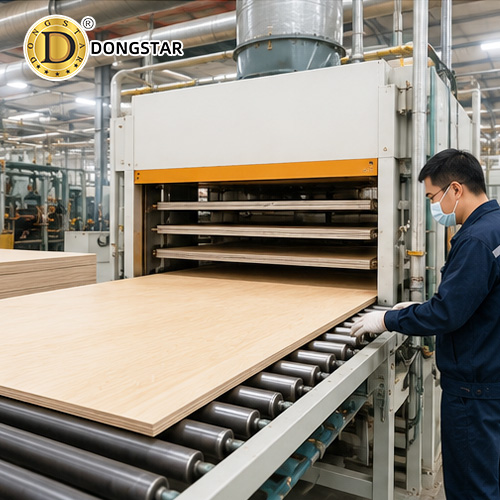
Advanced production lines and strict quality control ensure consistent product performance.
Flexible OEM Services
Dongstar supports customized specifications, private labeling, and export packaging tailored to customer requirements.
Professional Export Experience
The team assists buyers with documentation, logistics coordination, and after-sales service to simplify international procurement.

Frequently Asked Questions
What is the average plywood price per sheet in 2026?
Prices vary by product type, thickness, core material, and certifications. Commercial plywood typically ranges from approximately $9 to $22 per sheet (FOB), while marine and birch plywood are generally priced higher.
Why is China Plywood Price often lower than other countries?
China benefits from large-scale manufacturing, integrated supply chains, and efficient production processes, which help reduce overall production costs.
Does buying larger quantities reduce the price?
Yes. Full-container orders and long-term purchasing agreements usually qualify for more competitive factory pricing.
Is the cheapest plywood always the best option?
No. Lower prices may indicate lower-grade materials, reduced quality control, or inadequate packaging. Total procurement value is more important than unit price alone.
Which factors have the biggest impact on plywood pricing?
Core material, glue type, veneer grade, thickness, certifications, order quantity, and freight costs all play significant roles.
How can I obtain an accurate quotation?
Provide detailed specifications, including dimensions, thickness, core type, glue system, quantity, destination port, and any certification requirements.
Conclusion
Understanding the Plywood Price per Sheet involves more than comparing quotations. Successful importers evaluate specifications, manufacturing quality, logistics, certifications, and long-term supplier reliability to achieve the best overall value.
For global buyers seeking competitive China Plywood Price, stable product quality, and dependable supply, partnering with an experienced manufacturer is often the most effective strategy. By focusing on total procurement cost rather than simply the lowest price, businesses can reduce risk, improve project performance, and build stronger supply chains.
Recommended Reading from Dongstar Blog
- What is Plywood? Complete Guide for Importers in 2026
- How to Negotiate Plywood Prices with Chinese Factories: 12 Proven Strategies to Reduce Costs Without Sacrificing Quality
- China vs Vietnam Plywood: Which is Better for Importers in 2026?
- Dubai WoodShow 2026: Meet Dongstar at Booth A18 for Premium Plywood, MDF, OSB & Decorative Panels
- What to Check Before Buying Plywood from China: 12 Critical Factors Every Importer Must Know
- How to Find Reliable MDF Manufacturers in China
- Best Plywood Suppliers in China : Top China Plywood Factory Recommendations for Global Buyers
- How to Import Plywood from China? 2026 Step-by-Step Guide for Global Buyers
Post time: Jul-22-2026