

Table of Contents
- Why Buyers Compare China and Vietnam Plywood
- China and Vietnam Plywood Industry Overview
- China Plywood vs Vietnam Plywood: Quality Comparison
- Price Comparison: Which Country Offers Better Value?
- Production Capacity and Supply Stability
- How Anti-Dumping Duties Impact Your Sourcing Strategy
- Which Plywood Is Better for Large Projects?
- How Importers Choose Between China and Vietnam
- Why Global Buyers Work with Dongstar
- Frequently Asked Questions
One of the most common questions among global plywood buyers today is simple:
“Should I buy plywood from China or Vietnam?”
With ongoing changes in international trade policies, anti-dumping regulations, supply chain diversification, and rising construction demand, many importers are reassessing their sourcing strategies.
The reality is that there is no single answer that fits every market.
For some countries, China remains the most competitive sourcing destination. For others, Vietnam offers important advantages due to tariff policies and trade regulations.
This guide compares China Plywood and Vietnam Plywood from the perspective of importers, wholesalers, distributors, contractors, and project procurement teams.
Why Buyers Compare China and Vietnam Plywood
Google search trends show increasing interest in:
- China vs Vietnam Plywood
- Vietnam plywood supplier
- China plywood factory
- Anti-dumping plywood sourcing
- Alternative plywood suppliers
Several factors are driving this trend:
- Trade policy changes
- Anti-dumping investigations
- Global supply chain diversification
- Construction market growth
- Rising demand for engineered wood products
For professional buyers, selecting the right sourcing country directly affects profitability, compliance, lead times, and project success.
China and Vietnam Plywood Industry Overview
China Plywood Industry
China is the world’s largest plywood producer and exporter.
Advantages include:
- Massive production capacity
- Mature supply chains
- Extensive product variety
- Competitive manufacturing costs
- Advanced production equipment
China supplies:
- Commercial plywood
- Film Faced Plywood
- Furniture plywood
- Decorative plywood
- Marine plywood
- Specialty plywood
Many of the world’s largest plywood factories are located in Linyi, Shandong Province, often called the “Plywood Capital of China.”
Vietnam Plywood Industry
Vietnam’s plywood industry has grown significantly over the past decade.
Key strengths include:
- Export-oriented manufacturing
- Growing international demand
- Strategic trade advantages in some markets
- Increasing investment in production facilities
Vietnam is particularly active in:
- Furniture plywood
- Hardwood plywood
- Construction plywood
- Packaging plywood
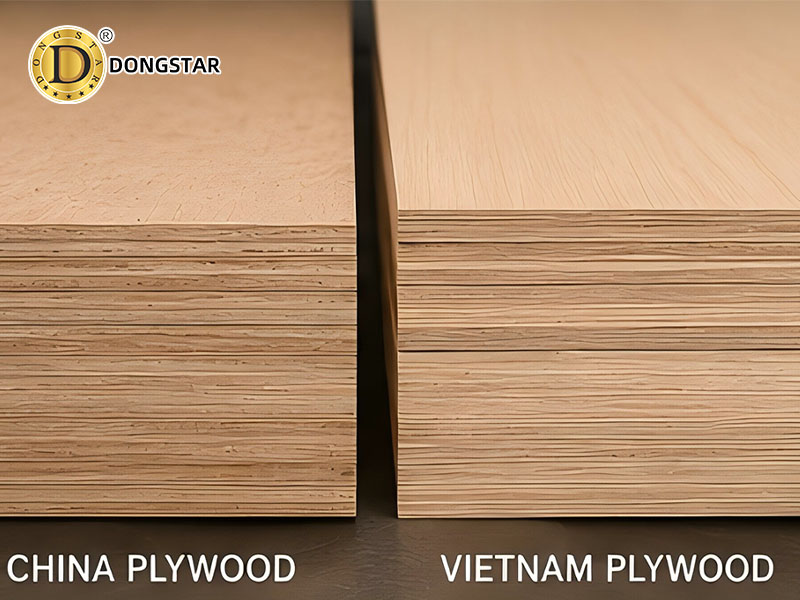
China Plywood vs Vietnam Plywood: Quality Comparison
One common misconception is that plywood quality depends solely on country of origin.
In reality, quality depends more on:
- Factory management
- Raw material selection
- Glue systems
- Production technology
- Quality control processes
China Plywood Quality
Top Chinese factories offer:
- Consistent veneer quality
- Stable core construction
- Advanced hot pressing technology
- Strict quality control systems
China also provides a broader range of grades and specifications.
Vietnam Plywood Quality
Vietnamese plywood can also achieve high quality standards, particularly in furniture applications.
However, factory scale and production consistency may vary more widely among suppliers.
Quality Verdict
For buyers sourcing from reputable manufacturers, both countries can provide excellent plywood quality.
Factory selection is generally more important than country selection.
Price Comparison: Which Country Offers Better Value?
Price remains one of the most searched topics among importers.
China Plywood Pricing Advantages
China benefits from:
- Large-scale manufacturing
- Integrated supply chains
- High production efficiency
- Extensive raw material networks
These advantages often result in lower production costs.
Vietnam Plywood Pricing
Vietnam can be competitive in certain product categories, especially when tariff considerations are included.
However, production costs are not always lower than China.
Cost vs Value
Professional buyers should evaluate:
- Product quality
- Consistency
- Freight costs
- Compliance requirements
- Lead times
The lowest price is not always the lowest total procurement cost.
Production Capacity and Supply Stability
For large projects and wholesale distribution, production capacity matters.
China Advantages
China remains the global leader in plywood output.
Benefits include:
- Large inventories
- Multiple production lines
- Faster scaling capacity
- Strong logistics infrastructure
Vietnam Advantages
Vietnam continues expanding production capacity but generally operates on a smaller scale than China.
For extremely large projects requiring continuous supply, China often provides greater flexibility.
Supply Stability Verdict
China currently offers stronger supply stability for high-volume international buyers.
How Anti-Dumping Duties Impact Your Sourcing Strategy
This is often the most important consideration.
Markets Without Anti-Dumping Duties
For countries where Chinese plywood is not subject to anti-dumping restrictions, China usually offers:
- Better pricing
- More product options
- Faster sourcing
- Greater supplier availability
In these markets, China often provides the best overall sourcing value.
Markets With Anti-Dumping Duties
Certain regions have implemented anti-dumping measures or trade restrictions affecting specific plywood products from China.
In these situations, Vietnam may become a more attractive sourcing option.
Benefits can include:
- Lower import duties
- Simplified compliance
- Improved landed cost competitiveness
Key Takeaway
The best sourcing country often depends on the import regulations of the destination market.
Buyers should always consult local customs and trade professionals before making sourcing decisions.
Which Plywood Is Better for Large Projects?
Project buyers typically prioritize:
- Supply consistency
- Technical specifications
- On-time delivery
- Cost control
China Often Leads For
- Large infrastructure projects
- Construction formwork
- Film Faced Plywood
- High-volume procurement
Vietnam Often Performs Well For
- Markets affected by anti-dumping duties
- Certain furniture manufacturing applications
- Diversified sourcing strategies
The right choice depends on project requirements and destination country regulations.
How Importers Choose Between China and Vietnam
Experienced importers generally evaluate:
Product Requirements
What plywood type is required?
Destination Market
Are anti-dumping duties applicable?
Volume Requirements
Can the supplier support long-term demand?
Certification Requirements
Are FSC, CARB, CE, or other certifications needed?
Lead Time Expectations
Can the supplier meet project deadlines?
The most successful buyers use a sourcing strategy based on business objectives rather than assumptions.
Why Global Buyers Work with Dongstar
Dongstar has built long-term relationships with distributors, importers, contractors, and project procurement companies worldwide.
Key advantages include:
Extensive Product Portfolio
- Commercial Plywood
- Film Faced Plywood
- MDF Board
- OSB Board
- Melamine Board
Export Experience
Support for:
- OEM branding
- Project procurement
- Customized specifications
- International documentation
Flexible Sourcing Solutions
Depending on market requirements and trade conditions, Dongstar helps buyers identify the most practical sourcing approach for their destination markets.
Professional Service
Global customers value responsive communication, reliable production schedules, and long-term partnership support.
Frequently Asked Questions
Is China plywood better than Vietnam plywood?
Not necessarily. Quality depends primarily on the manufacturer rather than the country.
Which country offers lower plywood prices?
In many markets without trade restrictions, China often provides stronger pricing advantages due to larger production capacity.
Why do some buyers choose Vietnam plywood?
Vietnam may be advantageous in markets where anti-dumping duties affect Chinese plywood imports.
Which country has larger production capacity?
China remains the world’s largest plywood producer and exporter.
Is Film Faced Plywood more commonly sourced from China?
Yes. China is one of the leading global suppliers of Film Faced Plywood for construction applications.
How do I choose the right supplier?
Evaluate factory capability, certifications, quality control systems, export experience, and long-term reliability.
Conclusion
The debate between China Plywood and Vietnam Plywood is not about which country is universally better.
The smarter question is:
“Which sourcing option is better for my market, my project, and my business?”
For countries without anti-dumping restrictions, China often delivers stronger advantages in pricing, product variety, production capacity, and supply stability.
For markets affected by anti-dumping duties, Vietnam may offer a more competitive import solution.
Ultimately, successful sourcing depends on understanding trade regulations, evaluating suppliers carefully, and choosing partners capable of delivering consistent quality and reliable service.
Recommended Reading from Dongstar Blog
- What is Plywood? Complete Guide for Importers in 2026
- Dubai WoodShow 2026: Meet Dongstar at Booth A18 for Premium Plywood, MDF, OSB & Decorative Panels
- What to Check Before Buying Plywood from China: 12 Critical Factors Every Importer Must Know
- How to Find Reliable MDF Manufacturers in China
- Best Plywood Suppliers in China : Top China Plywood Factory Recommendations for Global Buyers
- How to Import Plywood from China? 2026 Step-by-Step Guide for Global Buyers
- Why OSB Board is Trending in Global Construction? 2026 Buyer Guide for Importers and Builders
- What is Film Faced Plywood? 2026 Complete Guide to Formwork Plywood for Construction Projects
Post time: Jun-24-2026