
Table of Contents
- What is Film Faced Plywood?
- How Film Faced Plywood is Made
- Main Advantages of Film Faced Plywood
- Common Uses of Formwork Plywood
- Types and Specifications
- How to Choose High-Quality Film Faced Plywood
- How to Choose a Reliable Film Faced Plywood Supplier
- Why Importers Source from China
- 2026 Market and Pricing Trends
- FAQs
As global construction projects continue growing in scale and complexity, contractors and importers are paying more attention to durable and reusable building materials. One product that continues to dominate the concrete formwork industry is Film Faced Plywood.
Known for its waterproof surface, high strength, and repeated usage capability, film faced plywood has become a preferred material for builders, wholesalers, and project contractors worldwide.
But what exactly is film faced plywood, and why are so many international buyers sourcing it from a professional Film Faced Plywood Supplier in China?
This guide explains everything importers and construction buyers need to know in 2026.
What is Film Faced Plywood?
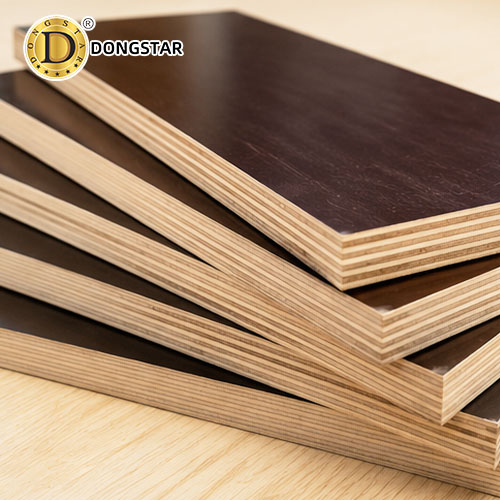
Film Faced Plywood is a type of engineered plywood covered with a waterproof phenolic film on both sides.
This protective film creates:
- A smooth concrete finish
- Better moisture resistance
- Increased durability
- Easier cleaning and reuse
Because of these advantages, film faced plywood is widely used as Formwork Plywood in concrete construction projects.
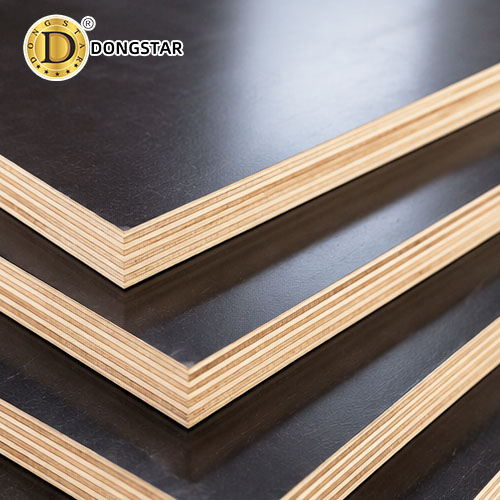
Core Structure
The board is usually manufactured using:
- Poplar core
- Hardwood core
- Birch core
- Mixed hardwood veneers
The surface film is bonded under high pressure and temperature using waterproof glue systems.
Why It Matters for Construction
Compared with ordinary plywood, film faced plywood performs much better in:
- Wet environments
- Heavy load applications
- Repeated concrete pouring cycles
This helps contractors reduce material waste and lower long-term project costs.
How Film Faced Plywood is Made
Understanding the manufacturing process helps buyers identify quality differences between suppliers.
Basic Production Process
- Veneer selection
- Core assembly
- Glue application
- Hot pressing
- Surface film lamination
- Edge sealing
- Sanding and quality inspection
Important Manufacturing Factors
High-quality film faced plywood depends heavily on:
- Veneer quality
- Glue performance
- Core density
- Pressing technology
- Film thickness
Poor production control can lead to:
- Delamination
- Edge cracking
- Surface bubbling
- Short reuse lifespan
That’s why choosing an experienced Film Faced Plywood Supplier is critical for large-scale projects.
Main Advantages of Film Faced Plywood
Film faced plywood remains one of the most searched construction plywood products because of its practical advantages.
1. Waterproof Surface
The phenolic film protects the board from:
- Water penetration
- Cement adhesion
- Surface damage
This allows easier cleaning after concrete pouring.
2. Reusability
One major advantage is repeated usage.
High-quality boards can often be reused:
- 10–20 times
- Or even more under proper handling
This significantly reduces overall construction costs.
3. Smooth Concrete Finish
The film surface creates:
- Cleaner concrete appearance
- Reduced surface defects
- Less finishing work
4. High Strength
Formwork plywood is designed to withstand:
- Heavy concrete pressure
- Construction loads
- Outdoor working conditions
5. Faster Construction Efficiency
Easy installation and removal improve jobsite productivity and reduce labor time.
Common Uses of Formwork Plywood
Film faced plywood is widely used across commercial and infrastructure projects.
Main Construction Applications
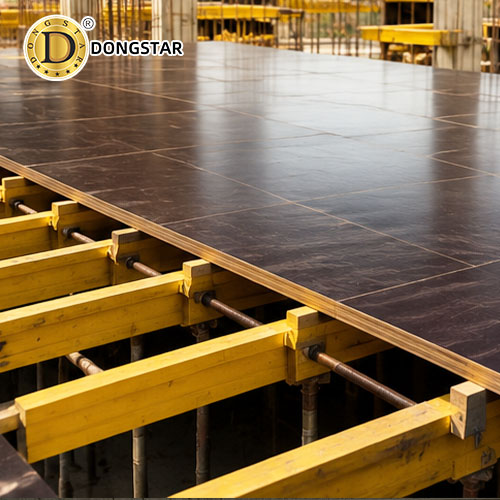
Concrete Formwork
The most common use for forming walls, slabs, beams, and columns.
High-Rise Buildings
Builders prefer durable plywood panels for repeated concrete cycles.
Bridge Construction
Water-resistant performance is essential for outdoor infrastructure work.
Industrial Projects
Warehouses and factories often require heavy-duty formwork systems.
Other Applications
In some markets, film faced plywood is also used for:
- Truck flooring
- Scaffolding platforms
- Temporary construction structures
Types and Specifications
Global buyers can choose from different types depending on project requirements.
Common Surface Colors
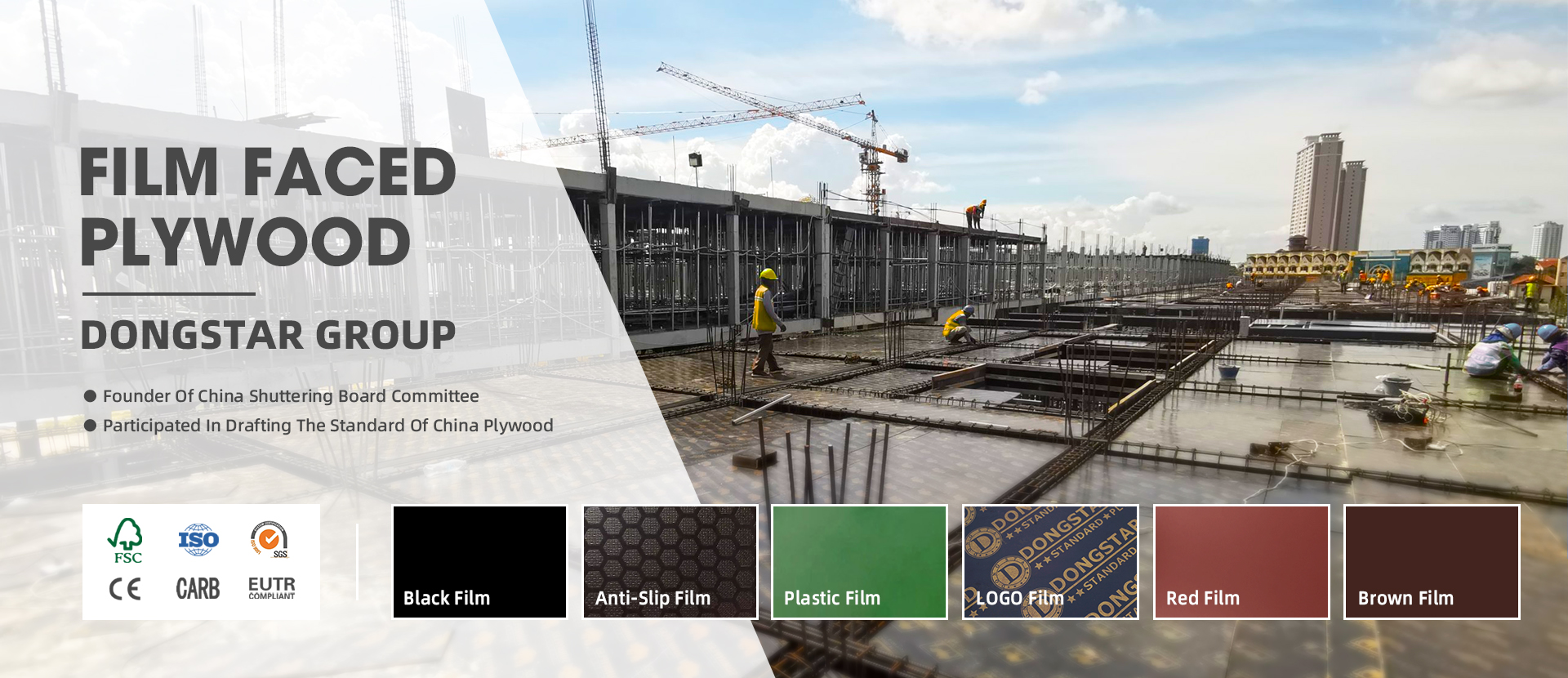
- Black Film Faced Plywood
- Brown Film Faced Plywood
- Red Film Faced Plywood
Black and brown surfaces remain the most popular worldwide.
Popular Sizes
| Size | Application |
|---|---|
| 1220 × 2440mm | Standard construction use |
| 1250 × 2500mm | European market |
| Customized sizes | Large projects |
Common Thicknesses
- 12mm
- 15mm
- 18mm
- 21mm
Among these, 18mm formwork plywood is the most widely used.
Glue Types
MR Glue
Basic moisture resistance.
WBP Glue
Superior waterproof performance for repeated outdoor use.
How to Choose High-Quality Film Faced Plywood
Not all plywood performs the same under construction conditions.
1. Check Core Quality
Better cores have:
- Fewer voids
- Stronger bonding
- Better density consistency
2. Verify Film Quality
Good film should:
- Resist peeling
- Maintain smoothness
- Handle repeated use
3. Confirm Glue Standards
For construction projects, WBP glue is highly recommended.
4. Examine Edge Sealing
Poor edge sealing allows water penetration and reduces lifespan.
5. Request Technical Data
Professional suppliers should provide:
- Density information
- Moisture content
- Reuse cycle estimates
- Certification documents
How to Choose a Reliable Film Faced Plywood Supplier
For importers and contractors, supplier reliability matters as much as product quality.
What Good Suppliers Should Offer
- Stable production capacity
- Export experience
- Strict quality control
- Fast delivery
- OEM customization
Questions Buyers Should Ask
What is the reuse cycle?
Usage performance varies greatly between factories.
What core material is used?
Core quality directly affects strength and durability.
What certifications are available?
Look for:
- FSC
- CE
- ISO
- CARB certifications
Red Flags to Avoid
- Extremely low prices
- Weak packaging
- Unclear technical specifications
- Inconsistent thickness tolerance
Why Importers Source from China
China remains one of the world’s largest producers of construction plywood products.
Advantages of Chinese Suppliers
Competitive Pricing
Large-scale production reduces manufacturing costs.
Strong Export Experience
Chinese factories understand:
- Container loading
- Export packaging
- International standards
- OEM production
Product Variety
Importers can source:
- Film faced plywood
- Marine plywood
- Commercial plywood
- MDF
- Decorative panels
Growing Global Demand
Search demand for:
- Formwork plywood
- Waterproof plywood
- Construction plywood supplier
continues rising in Southeast Asia, the Middle East, Africa, and South America.
2026 Market and Pricing Trends
Film faced plywood pricing in 2026 is affected by:
- Timber supply
- Resin costs
- Ocean freight rates
- Energy costs
- Environmental regulations
Current Market Trends
Recent demand trends show:
- Growing preference for durable reusable plywood
- Increased focus on waterproof performance
- Rising demand for FSC-certified products
Contractors are increasingly prioritizing long-term performance instead of only comparing initial pricing.
FAQs
What is Film Faced Plywood mainly used for?
It is mainly used for concrete formwork and construction shuttering systems.
Is Film Faced Plywood waterproof?
Yes. High-quality boards use waterproof phenolic film and WBP glue for moisture resistance.
How many times can formwork plywood be reused?
Depending on quality and handling, it can typically be reused 10–20 times or more.
Which thickness is best for construction?
18mm is the most commonly used thickness for concrete formwork applications.
What is the difference between film faced plywood and commercial plywood?
Film faced plywood is designed for construction and waterproof applications, while commercial plywood is mainly for indoor furniture and decoration.
How do I choose a reliable Film Faced Plywood Supplier?
Look for factories with export experience, strong quality control, certifications, and stable production capacity.
Conclusion
As construction standards continue rising globally, Film Faced Plywood remains one of the most cost-effective and practical materials for concrete formwork applications.
Its waterproof surface, durability, and reusable performance make it a preferred solution for contractors, importers, and project developers worldwide.
Working with a professional Film Faced Plywood Supplier helps ensure stable quality, competitive pricing, and long-term project success in 2026 and beyond.
Recommended Reading from Dongstar Blog
- What is Plywood? Complete Guide for Importers in 2026
- Marine Plywood vs Commercial Plywood: 2026 Buyer Comparison Guide from a Trusted China
- What is Melamine Board? 2026 Buyer’s Guide to Melamine Plywood & Melamine MDF
- How much does a 4×8 sheet of 3/4 plywood weigh? Cost Guide 2026
- How to Choose the Right MDF Board for Cabinets: 2026 Importer Guide from a Trusted MDF Board Supplier
- Marine Plywood vs Commercial Plywood: 2026 Buyer Comparison Guide from a Trusted China
Post time: May-14-2026