

Table of Contents
- What is Melamine Board?
- The Production Process of Melamine Boards
- Melamine Plywood vs. Melamine Medium-Density Fiberboard (MDF)
- Key Advantages of Melamine Boards
- Common Applications in Modern Projects
- Popular Finishes and Colors
- Wholesaler’s Import Guide
- 2026 Melamine Board Price Trends
- How to Choose a Reliable Supplier
- Frequently Asked Questions
- Conclusion
In today’s furniture and interior design industry, buyers are constantly seeking materials that combine durability, aesthetics, and competitive pricing. As a result, the demand for melamine boards continues to grow globally.
Whether you are a furniture importer, project contractor, wholesaler, or building materials distributor, understanding the differences between melamine plywood and melamine medium-density fiberboard (MDF) will help you make more informed purchasing decisions and reduce project costs.
This guide will provide you with all the information you need before purchasing melamine boards in 2026.
What is Melamine Board?
Melamine board is an engineered wood panel with a melamine-impregnated decorative paper coating, manufactured through a hot-pressing process. The substrate is typically plywood, medium-density fiberboard (MDF), or particleboard.
The melamine surface creates a smooth, durable, and aesthetically pleasing finish that is both modern and protects the board from scratches, stains, and moisture.
Compared to traditional painted boards, melamine boards offer the following advantages:
- More economical
- Easier to maintain
- Faster production speed
- A wider selection of colors and textures
Currently, melamine boards are widely used in:
- Furniture manufacturing
- Kitchen cabinets
- Office interiors
- Commercial furniture
- Commercial interior design projects
With its excellent cost-performance ratio, melamine boards have become one of the fastest-growing decorative boards globally.
The Production Process of Melamine Boards
Understanding the production process helps buyers better assess product quality.
Basic Production Process
- Core preparation
- Surface sanding
- Laying melamine paper
- High-temperature hot pressing
- Cooling and edge trimming
- Quality inspection
The decorative paper contains melamine resin, which hardens during pressing to form a durable outer layer.
Important Quality Factors
When importing melamine boards, buyers should check:
- Surface smoothness
- Edge integrity
- Adhesive strength
- Moisture resistance
- Formaldehyde emission
Reputable manufacturers maintain stable pressure and temperature control during production to prevent bubbling or delamination.
Melamine Plywood vs. Melamine Medium-Density Fiberboard (MDF)
One of the most searched topics recently is the comparison between melamine plywood and melamine medium-density fiberboard (MDF).
Melamine Plywood
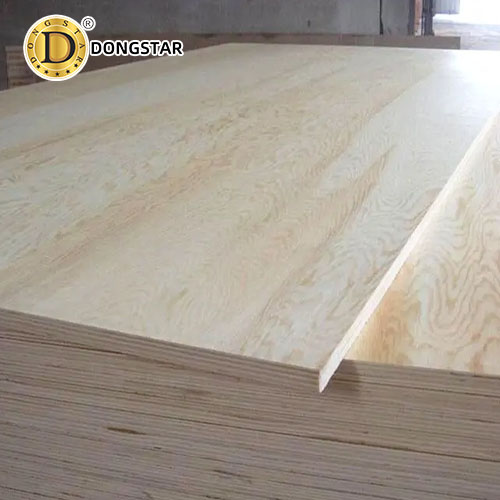
Melamine plywood uses plywood as its core material.
Advantages
- Stronger structure
- Stronger screw holding power
- Better moisture resistance
- Longer lifespan
Wideer applications
- Cabinets
- Commercial furniture
- Interior wall panels
- High-end projects
Melamine Medium-Density Fiberboard (MDF)
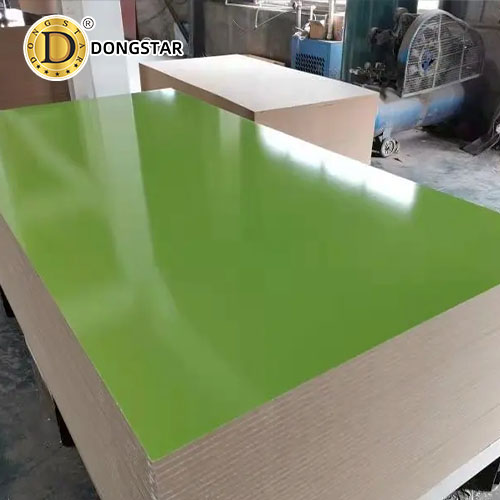
Melamine medium-density fiberboard (MDF) uses medium-density fiberboard as its core material.
Advantages
- Smoother surface
- Easier to paint and cut
- More economical
- Excellent flatness
Wideer applications
- Interior furniture
- Decorative shelves
- Office desks
- Cabinets
Which is better?
It depends on the specific project.
If durability and moisture resistance are primary considerations, choose melamine plywood.
If a smooth surface and lower cost are preferred, melamine-faced MDF is often the best option.
Key Advantages of Melamine Boards
The increasing popularity of melamine boards stems from their numerous practical advantages.
1. Decorative Appearance
Melamine boards are available in the following finishes:
- Wood grain finish
- Solid color finish
- Marble finish
- Matte finish
- High-gloss finish
This allows designers to create a high-end look without using expensive natural wood veneers.
2. Scratch Resistance
The melamine coating forms a hard protective layer that performs excellently in commercial environments.
3. Easy Maintenance
Unlike painted surfaces, melamine boards are easy to clean and require virtually no maintenance.
4. Affordability
Compared to solid wood or veneer boards, melamine boards offer a stylish look at a lower cost.
5. Faster production speed
Furniture manufacturers prefer melamine boards because they can shorten processing time and reduce labor costs.
Common Applications in Modern Projects
Melamine sheets are now used in almost every area of interior design.
Residential Projects
- Kitchen Cabinets
- Bedroom Wardrobes
- TV Cabinets
- Shelving Systems
Commercial Projects
- Office Furniture
- Hotel Interior Design
- Retail Displays
- Reception Desks
Industrial Use
- Detachable Furniture
- OEM Furniture Manufacturing
- Export Furniture Manufacturing
Large furniture exporters particularly favor melamine-faced panels because they improve production efficiency.
Popular Finishes and Colors
Modern buyers are no longer satisfied with ordinary white panels.
The most popular finishes in 2026 include:
- Oak Grain
- Walnut Grain
- Matte Black
- Cement Grey
- Textile Texture
- High Gloss White
Market Trends
Recent searches show growing demand for the following finishes:
- Fingerprint-Resistant Surfaces
- Ultra-Matte Finishes
- Synchronized Wood Grain Textures
These high-end finishes are increasingly popular in Europe, the Middle East, and North America.
Wholesaler’s Import Guide
For wholesalers and importers, consistent product quality is more important than low price.
Key Elements to Verify Before Ordering
Main Materials
- Confirm Board Material:
- Poplar Plywood
- Hardwood Plywood
- Medium-Density Fiberboard (MDF)
- Particleboard
Surface Quality
Inspect:
- Color Uniformity
- Scratch Resistance
- No Edge Defects
Emission Standards
Request Relevant Certifications, such as:
- CARB P2
- E0
- E1
- FSC
Packaging
Sturdy export packaging significantly reduces damage during transportation.
Recommended Ordering Process
- Request Samples
- Confirm Specifications
- Verify Certifications
- Conduct Factory Inspection
- Arrange Pre-shipment Quality Control
2026 Melamine Board Price Trends
The price of melamine boards in 2026 is affected by the following factors:
- Decorative Paper Costs
- Resin Prices
- Shipping Costs
- Environmental Regulations
Current Market Trends
Reasons for continued growth in global demand include:
- The increasing popularity of modular furniture
- The increase in commercial renovation projects
- Buyers tend to choose affordable decorative materials
Among all decorative boards, melamine medium-density fiberboard remains highly competitive in price-sensitive markets.
How to Choose a Reliable Supplier
Finding the right supplier is crucial for the long-term success of your business.
Looking for suppliers who can provide:
- Stable production capacity
- Export experience
- OEM customization services
- Quality certification
- Fast delivery
Warning signs to avoid:
- Inconsistent thickness
- Rough edge treatment
- Color difference
- Inadequate packaging
- Unclear specifications
A reliable supplier should provide transparent technical data and clear communication throughout the process.
Frequently Asked Questions
1. What are melamine boards mainly used for?
Melamine boards are commonly used in furniture, cabinets, wardrobes, office interiors, and decorative wall panels.
2. Is melamine plywood waterproof?
Melamine plywood has better moisture resistance than standard medium-density fiberboard (MDF), but its waterproof performance depends on the quality of the core material and adhesive.
3. What is the difference between melamine-faced MDF and plywood?
Melamine-faced MDF has a smoother surface and is less expensive, while plywood is stronger and more durable.
4. Is melamine board suitable for kitchen cabinets?
Yes. Due to its durability, attractive design, and ease of cleaning, melamine boards are widely used in modern kitchen cabinets.
5. What are the most common thicknesses?
The most common thicknesses are 12 mm, 15 mm, 18 mm, and 25 mm.
6.How to choose a melamine board supplier?
Choose suppliers with stringent quality control, export certifications, and international project experience.
Conclusion
As the global furniture and interior design market continues to evolve, melamine boards remain one of the most practical and cost-effective materials for wholesalers, importers, and project buyers.
Whether you choose melamine plywood for its durability or melamine medium-density fiberboard (MDF) for its cost-effectiveness, understanding product quality and supplier capabilities is crucial for long-term success.
For buyers seeking scalable, modern, and competitive decorative panels, melamine boards remain a wise investment in 2026.
Recommended Reading from Dongstar Blog
- What is Plywood? Complete Guide for Importers in 2026
- How much does a 4×8 sheet of 3/4 plywood weigh? Cost Guide 2026
- How Much is a Sheet of Plywood? 2026 Price Guide + 6 Cost-Saving Tips
- Plywood Shelving Ideas: Simple & Stylish Storage Solutions
- Plywood vs. MDF vs. Particle Board: Which is Best for Your Project?
Post time: May-07-2026