

Table of Contents
- What Is 18mm Plywood Used For?
- What Is 12mm Plywood Used For?
- What Is 21mm Plywood Used For?12mm vs 18mm vs 21mm Plywood: Which Thickness Should You Choose?
- 12mm Plywood vs 18mm Plywood for Furniture
- 18mm vs 21mm Plywood for Construction
- How Does Plywood Thickness Affect Weight and Shipping Cost?
- How to Choose the Right Plywood Thickness for Your Project
- 12mm, 18mm and 21mm Plywood for Wholesale Buyers
- What Should You Include in a Wholesale Plywood RFQ?
- How to Compare 12mm, 18mm and 21mm Plywood Suppliers
- Frequently Asked Questions About 12mm, 18mm and 21mm Plywood
- Final Guide: Choose Plywood Thickness by Application
What Is 18mm Plywood Used For?
18mm plywood is one of the most widely specified plywood thicknesses for furniture, cabinets, flooring components, construction applications and other projects where a relatively thick and rigid panel is required.
For B2B buyers, however, thickness alone does not determine whether 18mm plywood is the right product.
The final performance depends on the plywood construction, including the core material, veneer quality, glue system, density, surface grade and manufacturing standard.
Dongstar currently lists plywood thicknesses from approximately 2.7mm to 40mm, with 18mm and 21mm among the available thicknesses for specific plywood products. Its range includes commercial, furniture, hardwood, construction and waterproof plywood.
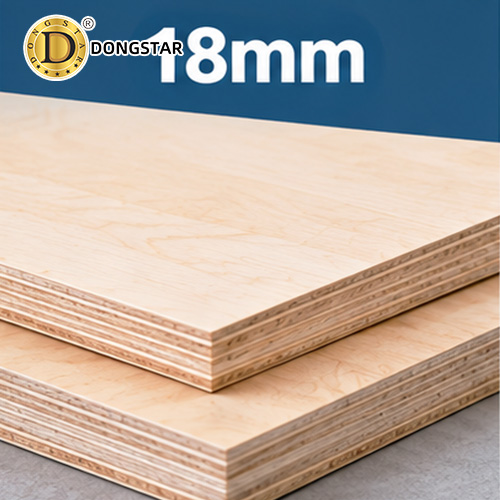
Common 18mm Plywood Applications
18mm plywood is commonly considered for:
- Furniture and cabinets
- Shelving and storage systems
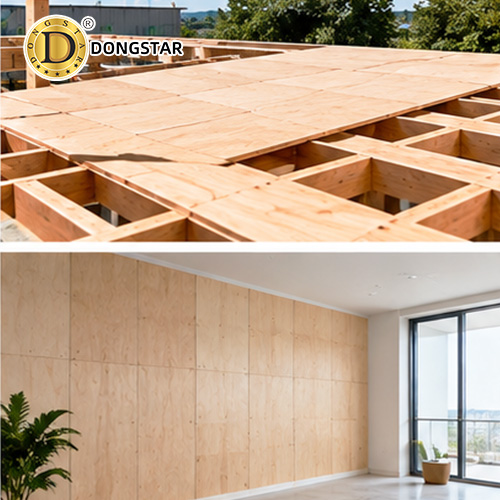
- Flooring and subfloor components
- Interior partitions
- Construction panels
- Doors and work surfaces
- Industrial and packaging components
For furniture manufacturers, 18mm is often useful when a panel needs more rigidity than a thinner sheet while remaining practical to machine, handle and assemble.
For construction applications, the required plywood grade and structural specification should be confirmed according to the project rather than selecting 18mm solely because it is thicker.
What Is 12mm Plywood Used For?
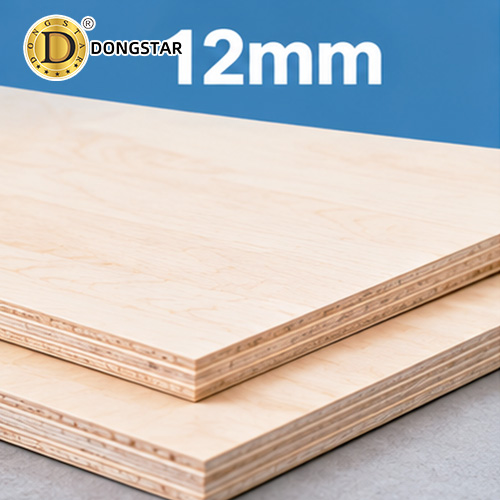
12mm plywood is a versatile mid-thickness panel used where buyers need a balance between panel rigidity, weight, material cost and ease of processing.
Common 12mm plywood uses include:
- Furniture components
- Shelving
- Cabinet parts
- Interior partitions
- Wall and ceiling panels
- Packaging
- Lightweight construction applications
- General-purpose industrial components
The main advantage of 12mm plywood is its relatively manageable weight compared with thicker panels.
This can matter for manufacturers who process large quantities of plywood or for projects where panels need to be moved and installed frequently.
However, 12mm plywood is not automatically suitable for every furniture or construction application. Span, load, support spacing, fixing method and plywood grade should be considered together.
What Is 21mm Plywood Used For?
18mm plywood is one of the most widely specified plywood thicknesses for furniture, cabinets, flooring components, construction applications and other projects where a relatively thick and rigid panel is required.
For B2B buyers, however, thickness alone does not determine whether 18mm plywood is the right product.
The final performance depends on the plywood construction, including the core material, veneer quality, glue system, density, surface grade and manufacturing standard.
Dongstar currently lists plywood thicknesses from approximately 2.7mm to 40mm, with 18mm and 21mm among the available thicknesses for specific plywood products. Its range includes commercial, furniture, hardwood, construction and waterproof plywood.
Common 18mm Plywood Applications
18mm plywood is commonly considered for:
- Furniture and cabinets
- Shelving and storage systems
- Flooring and subfloor components
- Interior partitions
- Construction panels
- Doors and work surfaces
- Industrial and packaging components
For furniture manufacturers, 18mm is often useful when a panel needs more rigidity than a thinner sheet while remaining practical to machine, handle and assemble.
For construction applications, the required plywood grade and structural specification should be confirmed according to the project rather than selecting 18mm solely because it is thicker.
What Is 12mm Plywood Used For?
12mm plywood is a versatile mid-thickness panel used where buyers need a balance between panel rigidity, weight, material cost and ease of processing.
Common 12mm plywood uses include:
- Furniture components
- Shelving
- Cabinet parts
- Interior partitions
- Wall and ceiling panels
- Packaging
- Lightweight construction applications
- General-purpose industrial components
The main advantage of 12mm plywood is its relatively manageable weight compared with thicker panels.
This can matter for manufacturers who process large quantities of plywood or for projects where panels need to be moved and installed frequently.
However, 12mm plywood is not automatically suitable for every furniture or construction application. Span, load, support spacing, fixing method and plywood grade should be considered together.
What Is 21mm Plywood Used For?
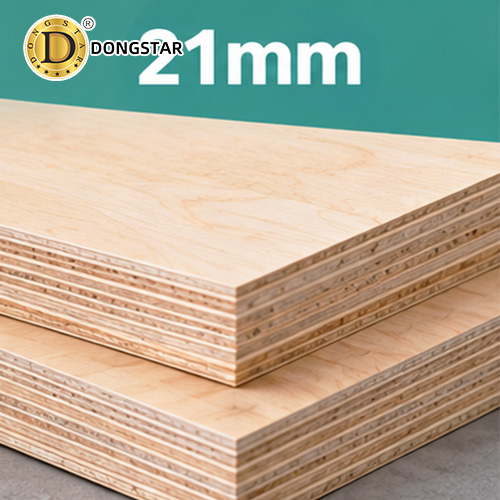
21mm plywood is generally selected when a project requires a thicker panel and greater rigidity than thinner commercial sheets can provide.
Typical 21mm plywood uses can include:
- Heavy-duty construction panels
- Concrete formwork
- Structural or semi-structural applications where specified
- Heavy-duty furniture components
- Industrial platforms and components
- Packaging requiring thicker panels
21mm is particularly relevant in the formwork plywood market. Dongstar’s film faced plywood specifications include 9/12/15/18/21mm thickness options, with phenolic, WBP and MR glue systems and core options such as birch, eucalyptus, poplar and combi.
For formwork, the actual performance depends on more than thickness. Face film, core construction, bonding quality, panel flatness and the expected number of concrete pours all need to be considered.
12mm vs 18mm vs 21mm Plywood: Which Thickness Should You Choose?
For global importers and project buyers, the easiest way to compare these thicknesses is to start with the application.
| Thickness | Typical Applications | Main Purchasing Consideration |
|---|---|---|
| 12mm | Furniture components, shelving, partitions, packaging | Lower weight and easier handling |
| 18mm | Furniture, cabinets, shelving, flooring, construction | Balance of rigidity, weight and cost |
| 21mm | Formwork, heavy-duty panels, industrial applications | Greater thickness and panel rigidity |
This table is a purchasing reference, not a structural design specification.
The same thickness can perform very differently depending on the plywood grade and construction.
For example, 18mm commercial plywood for furniture should not be evaluated in exactly the same way as 18mm film faced plywood designed for concrete formwork.
This is why B2B buyers should specify thickness + plywood type + core + glue + face/back grade + intended application when requesting a quotation.
12mm Plywood vs 18mm Plywood for Furniture
Furniture manufacturers often compare 12mm and 18mm plywood because both can be used for furniture components, but they serve different production requirements.
12mm Plywood for Furniture
12mm plywood can be considered for:
- Cabinet backs and components
- Shelves with appropriate support
- Drawer and storage components
- Interior partitions
- Lightweight furniture parts
Its lower weight can make handling and machining easier.
18mm Plywood for Furniture
18mm plywood is more appropriate when the design requires a thicker, more rigid panel.
Typical applications include:
- Cabinet carcasses
- Shelves with greater span
- Tables and work surfaces
- Furniture frames
- Heavy-duty storage units
For large-volume furniture production, the decision should be based on the actual cutting layout and load requirements rather than thickness alone.
Dongstar’s current product range includes commercial, furniture and hardwood plywood suitable for different furniture and interior applications.
18mm vs 21mm Plywood for Construction
Construction buyers often compare 18mm and 21mm plywood when panel rigidity, durability or formwork performance is important.
18mm plywood can be used for many general construction and building applications, but the appropriate grade depends on the project.
21mm plywood provides additional thickness and may be specified for applications requiring a thicker panel.
For concrete formwork, however, buyers should look beyond thickness.
Important specifications include:
- Film type
- Film weight
- Core species
- Number of veneer layers
- Glue type
- Panel density
- Thickness tolerance
- Flatness
- Edge sealing
- Expected reuse cycles
Dongstar’s film faced plywood specifications include 18mm and 21mm options, as well as different core, glue and surface configurations.
A 21mm panel is therefore not automatically better than an 18mm panel. The correct specification depends on the formwork system and project requirements.
How Does Plywood Thickness Affect Weight and Shipping Cost?
Thickness has a direct effect on plywood volume and usually affects the weight of each sheet.
For international buyers, this matters because plywood is commonly shipped in containers.
Moving from 12mm to 18mm or 21mm increases the amount of wood material per panel. The actual weight, however, also depends on density, core species, moisture content, glue and construction.
Dongstar’s current general plywood specification lists an approximate density range of 500–750 kg/m³ and moisture content of 8–14%, although the actual specification depends on the product.
For bulk purchasing, ask the supplier for:
- Net weight per sheet
- Gross weight per pallet
- Sheets per pallet
- Pallet dimensions
- Number of pallets per container
- Total loading weight
This gives importers a much more useful picture of the landed cost than the sheet price alone.
How to Choose the Right Plywood Thickness for Your Project
Instead of asking a supplier simply for “the strongest plywood,” define the application first.
Step 1: Define the Application
Is the plywood for:
- Furniture?
- Construction?
- Flooring?
- Packaging?
- Concrete formwork?
- Industrial components?
Step 2: Define the Load or Performance Requirement
Consider the expected load, span, support spacing and installation method.
Step 3: Select the Plywood Type
Commercial plywood, birch plywood, hardwood plywood and film faced plywood have different purposes.
Step 4: Specify the Core
Common options include:
Step 5: Specify the Glue
Depending on the application, buyers may request:
- MR
- Melamine
- WBP
- Phenolic
Step 6: Confirm the Thickness
Only after the above requirements are clear should the buyer finalize 12mm, 18mm, 21mm or another thickness.
This process helps prevent a common purchasing mistake: choosing a plywood thickness first and trying to fit the application around it.
12mm, 18mm and 21mm Plywood for Wholesale Buyers
For wholesalers and importers, thickness should also be considered from a market-demand perspective.
12mm plywood can be useful when customers need versatile, relatively lightweight panels.
18mm plywood has broad potential across furniture, cabinetry, construction and general panel applications.
21mm plywood is more specialized and can be attractive for customers requiring thicker construction or formwork panels.
For a distributor, the best product mix depends on local demand, customer applications, container loading and inventory turnover.
Instead of purchasing every available thickness, wholesalers can analyze customer orders and focus on the thicknesses that repeatedly generate demand.
Dongstar’s product listings show commercial plywood available in several thicknesses including 12mm, 15mm, 18mm and 21mm, while its broader plywood range covers additional thicknesses depending on product type.
What Should You Include in a Wholesale Plywood RFQ?
A professional RFQ should contain more information than just “12mm plywood” or “18mm plywood.”
A useful specification could include:
Product: Commercial Plywood
Size: 1220×2440mm
Thickness: 18mm
Core: Eucalyptus
Face/Back: BB/CC
Glue: WBP
Surface: Sanded two sides
Quantity: 1×40HQ
Packaging: Export standard
Destination: European port
Certification: Required certification
Inspection: Third-party inspection if required
For 21mm film faced plywood, add:
Film: Brown or black phenolic film
Core: Eucalyptus/Birch/Combi
Glue: Phenolic/WBP
Expected reuse: Project requirement
A detailed RFQ makes supplier quotations easier to compare and reduces specification disputes before production.
How to Compare 12mm, 18mm and 21mm Plywood Suppliers
For large B2B orders, the cheapest quotation is not necessarily the lowest total cost.
Compare suppliers based on:
- Product consistency
- Thickness tolerance
- Core quality
- Face/back grade
- Glue performance
- Moisture control
- Packaging
- Production capacity
- Certification
- Inspection support
- Container loading
- Lead time
Dongstar’s plywood range lists different face/back veneers, core materials, grades and glue systems, allowing buyers to configure plywood according to product and application requirements.
For repeat orders, consistency is particularly important. A furniture manufacturer or distributor needs the second shipment to match the approved specification rather than simply receiving another product with the same nominal thickness.
Frequently Asked Questions About 12mm, 18mm and 21mm Plywood
What is 12mm plywood commonly used for?
12mm plywood is commonly used for furniture components, shelving, partitions, packaging and various interior or general-purpose applications where a balance between weight and panel rigidity is required.
What is 18mm plywood used for?
18mm plywood is widely used for furniture, cabinets, shelving, flooring components, construction panels and other applications requiring a relatively thick and rigid plywood panel.
What is 21mm plywood used for?
21mm plywood is commonly considered for thicker construction panels, concrete formwork and heavy-duty industrial or furniture applications where the project requires additional panel thickness.
Is 18mm plywood stronger than 12mm plywood?
All else being equal, a thicker plywood panel generally provides greater stiffness. However, actual performance also depends on core construction, wood species, density, veneer quality, glue and panel design.
Is 21mm plywood better than 18mm plywood?
Not necessarily. The appropriate thickness depends on the application. A properly specified 18mm panel can be more suitable than 21mm plywood when the additional thickness is unnecessary.
Which plywood thickness is best for furniture?
There is no single thickness for all furniture. 12mm may suit some components, while 18mm is often considered for thicker cabinet, shelving and structural furniture components. The design and load requirement should determine the specification.
Is 21mm plywood suitable for concrete formwork?
It can be, depending on the formwork system and plywood construction. Film type, core, glue, surface quality, flatness and expected reuse should be checked together with thickness.
Can I buy 12mm, 18mm and 21mm plywood wholesale?
Yes. These thicknesses are available in Dongstar’s product range for specific plywood products, with specifications depending on product type, size, core, face/back and glue system.
Final Guide: Choose Plywood Thickness by Application
The simplest way to understand these three plywood thicknesses is:
12mm plywood — useful for lighter furniture, partitions, shelving and general panel applications.
18mm plywood — a versatile option for furniture, cabinets, shelving, flooring components and many construction applications.
21mm plywood — suitable for projects requiring a thicker panel, including certain formwork and heavy-duty applications.
But thickness is only one part of the specification.
For global project buyers, wholesalers and importers, the better purchasing approach is to specify the complete plywood construction:
Size + Thickness + Core + Face/Back + Glue + Grade + Application + Quantity
That gives the manufacturer enough information to recommend a suitable product and provide a meaningful quotation.
For bulk procurement, the goal is not to buy the thickest plywood available. It is to buy the right plywood thickness and construction for the intended application, with consistent quality from one shipment to the next.
Recommended Reading from Dongstar Blog
- What is Plywood? Complete Guide for Importers in 2026
- Can You Order Custom Plywood Sizes and Thicknesses? A B2B Manufacturer Guide
- Plywood Sheets Wholesale Sizes: Standard & Custom Guide
- How Thick Is 3/4 Inch Plywood in mm? 1/2″ & 5/8″ Guide
- 1220×2440mm vs 1250×2500mm Plywood: Size Guide for Buyers
- 12mm vs 18mm Plywood: Which Thickness Should You Choose?
- Standard Plywood Sheet Sizes: 4×8, 1220×2440mm & More | 2026 Guide
- Plywood Sizes & Thickness: Standard Sheet Dimensions Guide 2026
- OSB vs Particle Board: 2026 Comparison for Global Buyers | China Supplier Guide
Post time: Sep-20-2026