

Table of Contents
- Standard vs Custom Plywood Sizes: What Is the Difference?
- What Are the Most Common Plywood Sheets Wholesale Sizes?
- Plywood Supplier Standard Sizes: When Should You Choose Them?
- When Do You Need a Plywood Manufacturer for Custom Sizes?
- How Plywood Sheet Size Affects Wholesale Price
- Why Cutting Efficiency Matters for Bulk Buyers
- How Sheet Dimensions Affect Container Loading
- What to Include When Requesting a Wholesale Plywood Quote
- Why Buy Wholesale Plywood from a China Manufacturer?
- How to Choose the Right Plywood Supplier
- Frequently Asked Questions
- Final Advice for Wholesale Plywood Buyers
When buying plywood by the container, sheet size is a commercial decision, not just a technical specification.
A few centimeters can affect cutting waste, the number of finished panels you get from each sheet, warehouse space, container loading and your final cost per usable square meter.
That is why professional importers, wholesalers and project contractors often compare plywood sheets wholesale sizes before they compare suppliers.
The two main options are straightforward:
- Buy a common standard sheet size.
- Ask a manufacturer to produce a custom plywood size.
Both can work well. The better choice depends on your application, order volume, cutting plan and destination market.
This guide explains what bulk buyers should consider before placing a plywood order.
Standard vs Custom Plywood Sizes: What Is the Difference?
Standard plywood sizes are dimensions that a manufacturer produces regularly.
Common examples include:
- 1220 × 2440mm
- 1250 × 2500mm
- 1220 × 2500mm
- 1250 × 3050mm
- 4 × 8 ft sheets in markets using imperial dimensions
Exact availability varies by factory and product type.
A standard size normally has an advantage in production efficiency. The factory may already have the production setup, packaging method and raw-material arrangement in place.
Custom sizes are different.
A plywood manufacturer custom sizes program may be worthwhile when your finished components require a particular panel dimension or when a different sheet size significantly reduces cutting waste.
For example, a furniture manufacturer might need a panel slightly larger than a standard sheet to produce a specific cabinet component efficiently.
The important point is simple:
Do not choose custom plywood merely because it is possible. Choose it when the manufacturing or material-utilization benefit justifies the additional production requirements.
What Are the Most Common Plywood Sheets Wholesale Sizes?
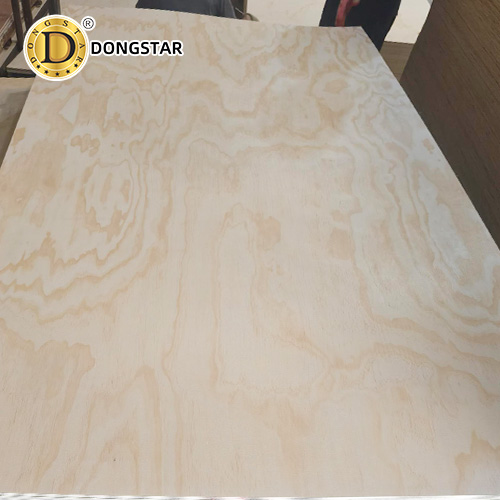
For international B2B purchasing, 1220 × 2440mm and 1250 × 2500mm are particularly important formats.
1220 × 2440mm
This dimension is commonly associated with the 4 × 8 plywood format.
It is widely used for:
- Construction
- Furniture
- Cabinets
- Interior panels
- Packaging
- General commercial applications
Its familiarity makes it a practical choice when downstream customers already work with 4 × 8 sheets.
1250 × 2500mm
This is a larger metric format.
It provides approximately 3.125m² per sheet, compared with approximately 2.977m² for 1220 × 2440mm.
The additional area can be useful when larger furniture components or construction panels can be cut efficiently from the sheet.
However, the larger sheet isn’t automatically more economical.
The correct comparison is:
sheet price → area → cutting waste → usable material cost.
For large orders, this calculation is much more useful than comparing the price of individual sheets.
Plywood Supplier Standard Sizes: When Should You Choose Them?
Standard sizes are usually the safest starting point for wholesalers and importers.
Choose a standard dimension when:
- Your customers already request that size.
- Your cutting equipment is designed around it.
- The standard sheet gives acceptable material utilization.
- You want straightforward repeat orders.
- You need several containers with consistent specifications.
There is also a supply-chain benefit.
When a specification is a manufacturer’s regular product, production planning can be easier and lead times may be more predictable.
For distributors, this consistency matters.
Your customers may not care how the plywood was manufactured, but they will notice if one shipment has noticeably different dimensions, thickness or quality from the previous shipment.
For this reason, repeat buyers should establish a written product specification rather than relying only on a product name such as “commercial plywood.”
When Do You Need a Plywood Manufacturer for Custom Sizes?
Custom plywood sizes make the most sense when they solve a real production problem.
Typical reasons include:
- Reducing cutting waste
- Matching a specific furniture design
- Meeting a project drawing
- Optimizing CNC nesting
- Producing larger components
- Matching an existing panel system
- Improving material utilization
Suppose your finished components repeatedly leave a large strip of unused plywood from a standard 1220 × 2440mm sheet.
If a custom dimension can eliminate much of that waste across tens of thousands of sheets, the economics may favor custom production.
But the buyer should calculate the benefit first.
Ask the manufacturer for:
- Minimum order quantity
- Custom-size tolerance
- Production lead time
- Additional cost
- Sample availability
- Packaging requirements
- Container loading plan
Custom dimensions should be confirmed in writing before mass production.
How Plywood Sheet Size Affects Wholesale Price
A larger sheet normally contains more material, so it will generally have a higher price per sheet.
That does not mean it has a higher cost per square meter.
For example, when comparing two quotations, calculate:
Price per m² = Price per sheet ÷ Sheet area
But B2B procurement should go one step further.
Consider:
Effective material cost = Purchase cost ÷ Usable material
A cheaper sheet that creates significant offcuts can cost more in the finished product.
When requesting a plywood wholesale price, make sure suppliers quote identical specifications.
Compare:
- Sheet dimensions
- Thickness
- Thickness tolerance
- Core species
- Number of plies
- Face/back grade
- Glue type
- Formaldehyde requirements
- Sanding
- Moisture
- Packaging
- Quantity
- Incoterm
Without these details, comparing supplier prices can be misleading.
Why Cutting Efficiency Matters for Bulk Buyers
For project buyers, cutting efficiency can be more important than the nominal sheet price.
Consider a furniture factory purchasing 10,000 sheets.
If one sheet size produces 80% usable material while another produces 90%, the difference becomes significant across the entire order.
The best way to make the decision is to create a cutting or CNC nesting plan before confirming the size.
Give your supplier:
- Finished component dimensions
- Required quantities
- Grain direction
- Saw kerf
- Edge allowances
- CNC restrictions
- Acceptable offcuts
Then compare standard and custom formats.
This is especially useful for plywood sheet sizes wholesale programs because a small improvement in material utilization can have a large effect at container scale.
How Sheet Dimensions Affect Container Loading
Sheet dimensions also affect international logistics.
The supplier should consider:
- Sheets per pallet
- Pallet footprint
- Stack height
- Gross weight
- Container internal dimensions
- Loading method
- Protection during transport
A custom sheet may fit your cutting requirements perfectly but create an inefficient pallet configuration.
The reverse can also happen.
A standard sheet may be easy to pack and ship but produce unnecessary cutting waste at your factory.
For this reason, serious importers should evaluate product cost and logistics cost together.
Before placing a large order, ask the supplier for an estimated packing and container-loading plan.
What to Include When Requesting a Wholesale Plywood Quote
A detailed RFQ makes supplier comparison much easier.
Instead of writing:
“Please quote plywood wholesale.”
Provide a complete specification.
Product: Commercial / film faced / furniture plywood
Size: 1220 × 2440mm or required custom dimension
Thickness: Required thickness
Core: Required species
Face/back: Required grade
Glue: MR / WBP / other requirement
Sanding: One or two sides
Tolerance: Project requirement
Quantity: Sheets or containers
Destination: Port and country
Incoterm: FOB / CIF / other
Packaging: Export standard
Inspection: Required or not
If you’re evaluating several suppliers, send exactly the same RFQ to each company.
That creates a genuine apples-to-apples comparison.
Why Buy Wholesale Plywood from a China Manufacturer?
China is an established sourcing market for plywood and other wood-based panels.
For international buyers, one practical advantage is product variety. Depending on the factory, buyers may be able to source different plywood types, thicknesses, dimensions, core materials and surface grades.
A capable China plywood supplier may also be able to discuss standard and custom dimensions within the same production program.
For container buyers, this can simplify procurement.
However, buyers should not select a supplier based solely on a website or the lowest quotation.
Before mass production, verify:
- Factory capability
- Product samples
- Technical specifications
- Quality-control process
- Export experience
- Packaging
- Production capacity
- Required certifications
- Third-party inspection options
For regulated construction applications, always confirm the standards and certification requirements applicable to the destination market.
How to Choose the Right Plywood Supplier
The best plywood supplier is not necessarily the supplier offering the lowest initial price.
For a long-term B2B relationship, look for a supplier that can consistently control the specification.
Ask practical questions:
Can they reproduce the same size?
Dimensional consistency is critical for automated processing.
Can they provide samples before production?
A sample gives you an opportunity to check the face, core, glue and workmanship.
Can they explain their quality-control process?
A professional supplier should be able to explain how thickness, dimensions, bonding and appearance are checked.
Can they handle your volume?
A factory that can produce a few hundred sheets isn’t necessarily suitable for a multi-container project.
Can they communicate clearly?
Good communication reduces misunderstandings about specifications, packaging and delivery.
For global buyers, these factors often matter more than saving a few cents per sheet.
Dongstar supplies plywood and other wood-based panels to international B2B customers. Buyers can send their required dimensions, thickness, grade, quantity and destination to request a specification-based quotation.
Frequently Asked Questions
What are the most common wholesale plywood sheet sizes?
1220 × 2440mm and 1250 × 2500mm are widely used international formats. Other sizes are available depending on the manufacturer and application.
Can a plywood factory make custom sizes?
Many manufacturers can produce custom dimensions, but capability, minimum order quantity, tolerance and lead time vary. Confirm these details before ordering.
Are custom plywood sizes more expensive?
They can be. The cost depends on the dimension, production process, order quantity and whether the size is already part of the factory’s regular production.
Is 1220 × 2440mm the same as 4 × 8 plywood?
It is commonly treated as the metric equivalent of 4 × 8 plywood, although the exact imperial conversion is slightly different. Always state the exact required dimensions in your purchase order.
Should wholesalers buy standard or custom plywood?
Standard sizes are usually preferable when they match customer demand and production requirements. Custom sizes become attractive when they significantly improve material utilization or satisfy a specific project requirement.
How should I compare plywood supplier prices?
Compare identical specifications and calculate price per square meter. For manufacturing applications, also consider cutting waste, logistics and the usable material obtained from each sheet.
What information should I send a plywood manufacturer?
Send the plywood type, dimensions, thickness, core, face/back grade, glue requirement, quantity, packaging, destination and any applicable standards or certifications.
Final Advice for Wholesale Plywood Buyers
Choosing between standard and custom plywood dimensions comes down to one question:
Which sheet size gives you the best total cost for the finished application?
For many wholesalers, standard sizes such as 1220 × 2440mm or 1250 × 2500mm are the most practical choice.
For large furniture programs and specialized projects, custom dimensions can make sense when they reduce cutting waste and improve production efficiency.
Before ordering, compare more than the sheet price.
Look at:
- Material utilization
- Cutting waste
- Sheet weight
- Pallet configuration
- Container loading
- Production lead time
- Quality consistency
- Supplier capability
For container-scale procurement, send the manufacturer your actual project dimensions and quantities. A good supplier should be able to help you evaluate the most practical sheet format rather than simply quote the cheapest standard panel.
That is the difference between buying plywood and building an efficient plywood supply chain.
Recommended Reading from Dongstar Blog
- What is Plywood? Complete Guide for Importers in 2026
- 1220×2440mm vs 1250×2500mm Plywood: Size Guide for Buyers
- 12mm vs 18mm Plywood: Which Thickness Should You Choose?
- Standard Plywood Sheet Sizes: 4×8, 1220×2440mm & More | 2026 Guide
- Plywood Sizes & Thickness: Standard Sheet Dimensions Guide 2026
- OSB vs Particle Board: 2026 Comparison for Global Buyers | China Supplier Guide
- 7/16 OSB Board Weight and 7/16 OSB Price Guide 2026 | OSB Supplier China
- How Much Does a 4×8 Sheet of 1/2 Plywood Weigh? | 1/2 Plywood Weight Guide 2026
Post time: Sep-01-2026