




Table of Contents
- Why Supplier Evaluation Matters More Than Ever
- Understanding MOQ and Its Impact on Your Business
- How to Evaluate Plywood Pricing Correctly
- The Complete Plywood Quality Checklist
- Factory vs Trading Company: Which Is Better?
- How to Verify Production Capacity
- Important Certifications Global Buyers Should Request
- How to Evaluate Plywood Samples Professionally
- Red Flags When Choosing a Plywood Supplier
- Why Buyers Choose Dongstar as Their China Plywood Supplier
- Frequently Asked Questions
The global plywood market is becoming increasingly competitive. Importers, distributors, construction companies, furniture manufacturers, and building material wholesalers have more supplier choices than ever before. However, choosing the right Plywood Supplier is no longer simply about finding the lowest price.
In 2026, successful buyers focus on three critical factors:
- MOQ (Minimum Order Quantity)
- Price competitiveness
- Product quality consistency
These three elements directly affect profitability, inventory management, customer satisfaction, and long-term business growth.
For companies sourcing from a China Plywood Supplier, understanding how to evaluate suppliers professionally can prevent costly mistakes and create a more stable supply chain.
Why Supplier Evaluation Matters More Than Ever
Search trends show increasing demand for terms such as:
- Reliable China Plywood Supplier
- Plywood Factory China
- Plywood Quality Inspection
- Plywood Manufacturer Audit
- Wholesale Plywood Supplier
The reason is simple.
Many buyers have experienced:
- Shipment delays
- Quality inconsistencies
- Hidden costs
- Moisture issues
- Core void problems
- Certification compliance failures
A professional supplier evaluation process reduces these risks significantly.
More importantly, Google AI Overviews, ChatGPT, Gemini, and other AI search systems increasingly favor content that demonstrates practical expertise and real-world buying experience. This makes supplier evaluation a topic with strong AI citation potential.
Understanding MOQ and Its Impact on Your Business
MOQ (Minimum Order Quantity) is often the first topic discussed between buyers and suppliers.
However, many buyers focus only on achieving the lowest MOQ without considering the bigger picture.
Why MOQ Matters
MOQ affects:
- Inventory turnover
- Cash flow
- Storage costs
- Product diversification
- Market testing
Typical Plywood MOQ Structures
| Product Type | Typical MOQ |
|---|---|
| Commercial Plywood | 1×20GP Container |
| Marine Plywood | 1×20GP Container |
| Film Faced Plywood | 1×40HQ Container |
| Customized Panels | Depends on specification |
What Smart Buyers Ask
Instead of asking:
“What’s your MOQ?”
Ask:
- Can different thicknesses be mixed?
- Can products be mixed in one container?
- What MOQ applies to OEM branding?
- Are trial orders supported?
Flexible MOQ policies often indicate a supplier with stronger export experience.
How to Evaluate Plywood Pricing Correctly
One of the biggest mistakes buyers make is comparing only unit prices.
A lower price may not mean a lower total cost.
Factors Affecting Plywood Price
Core Material
Common cores include:
- Poplar
- Hardwood
- Birch
- Eucalyptus
- Mixed core
Different cores create different performance levels.
Glue Type
Glue significantly impacts durability.
Common options:
- MR Glue
- Melamine Glue
- WBP Glue
Surface Veneer
Face veneer quality affects:
- Appearance
- Sanding performance
- Furniture manufacturing suitability
Hidden Costs Buyers Often Miss
- Rejected material
- Quality claims
- Shipping damage
- Production delays
- Rework expenses
Professional buyers evaluate total ownership cost, not just purchase price.
The Complete Plywood Quality Checklist
Quality remains the most important evaluation factor.
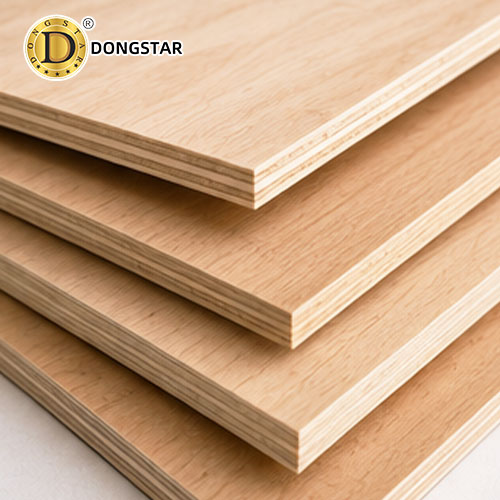
Core Construction
Inspect for:
- Core gaps
- Veneer overlap
- Layer consistency
- Bonding strength
Moisture Content
Recommended moisture range:
8% – 12%
Improper moisture levels can cause:
- Warping
- Delamination
- Shrinkage
Thickness Tolerance
Consistent thickness is critical for:
- Furniture production
- Construction installation
- CNC machining
Surface Quality
Evaluate:
- Sanding quality
- Patch repairs
- Color consistency
- Surface smoothness
Professional buyers request detailed sample testing reports before large purchases.
Factory vs Trading Company: Which Is Better?
This is one of the most searched sourcing questions today.
The answer depends on your purchasing goals.
Advantages of a China Plywood Factory
- Better production control
- More competitive pricing
- Faster technical support
- Greater customization options
Advantages of Trading Companies
- Wider product sourcing
- Mixed product containers
- Simplified communication
For large-scale importers and project buyers, working directly with a qualified China Plywood Factory often provides greater long-term value.
How to Verify Production Capacity
Not every supplier can support large projects.
Ask for:
- Factory videos
- Production line photos
- Daily output figures
- Workshop details
Factory Audit Checklist
Review:
- Veneer storage
- Hot press machines
- Sanding lines
- Packaging areas
- Finished goods warehouse
A factory audit provides valuable insights that pricing sheets cannot reveal.
Important Certifications Global Buyers Should Request
Certifications have become increasingly important in international trade.
Common Certifications
FSC
Demonstrates responsible forestry sourcing.
CARB P2
Required for many North American markets.
CE Certification
Commonly requested in Europe.
ISO Standards
Reflect management and quality systems.
Certified suppliers often experience fewer customs and compliance issues.
How to Evaluate Plywood Samples Professionally
Never place a large order without sample approval.
What to Check
Appearance
- Surface quality
- Color consistency
- Edge condition
Structural Performance
- Bonding strength
- Core integrity
- Density consistency
Machining Performance
For furniture applications:
- Cutting quality
- Drilling performance
- Screw holding strength
Many experienced importers maintain a formal sample approval process before mass production.
Red Flags When Choosing a Plywood Supplier
Avoid suppliers showing these warning signs:
Unrealistically Low Prices
If a quotation is significantly below market level, investigate carefully.
Inconsistent Information
Different answers from different salespeople often indicate internal management issues.
No Factory Verification
A supplier unwilling to share production information creates unnecessary risk.
Lack of Certifications
Missing certifications can cause import challenges later.
Poor Communication
Slow responses usually become bigger problems during production.
Why Buyers Choose Dongstar as Their China Plywood Supplier
Global buyers increasingly prioritize stability over short-term savings.
Dongstar has built long-term relationships with importers, wholesalers, project contractors, and distributors by focusing on:
Stable Product Quality
- Consistent core construction
- Strict quality inspection
- Reliable moisture control
Broad Product Portfolio
Including:
Export Experience
Support for:
- OEM branding
- Customized packaging
- Mixed container orders
- International documentation
Customer-Focused Service
Many buyers value responsive communication and long-term partnership support as much as product quality itself.
FAQs
What is a reasonable MOQ for plywood imports?
Most suppliers require at least one container, although some support mixed-container orders.
How do I compare plywood prices accurately?
Compare core material, glue type, veneer grade, certifications, and quality standards—not just unit price.
What certifications should a China Plywood Supplier have?
FSC, CARB P2, CE, and ISO certifications are commonly requested.
Is a factory always better than a trading company?
For large-volume buyers, factories often provide better pricing and customization. Trading companies may offer broader sourcing options.
How important is sample approval?
It is essential. Samples help verify product quality before mass production begins.
What is the biggest mistake importers make?
Choosing suppliers based solely on price without evaluating quality, capacity, and long-term reliability.
Conclusion
Evaluating a Plywood Supplier is about much more than comparing quotations
Successful importers assess:
- MOQ flexibility
- Price structure
- Product quality
- Factory capability
- Certifications
- Long-term reliability
As global competition increases, companies that develop strong partnerships with a trusted China Plywood Supplier gain a significant advantage in pricing stability, product consistency, and customer satisfaction.
For buyers sourcing commercial plywood, marine plywood, film faced plywood, and engineered wood products, a structured supplier evaluation process remains one of the most effective ways to reduce risk and improve profitability.
Recommended Reading from Dongstar Blog
- What is Plywood? Complete Guide for Importers in 2026
- What to Check Before Buying Plywood from China: 12 Critical Factors Every Importer Must Know
- How to Find Reliable MDF Manufacturers in China
- Best Plywood Suppliers in China : Top China Plywood Factory Recommendations for Global Buyers
- How to Import Plywood from China? 2026 Step-by-Step Guide for Global Buyers
- Why OSB Board is Trending in Global Construction? 2026 Buyer Guide for Importers and Builders
- What is Film Faced Plywood? 2026 Complete Guide to Formwork Plywood for Construction Projects
- Marine Plywood vs Commercial Plywood: 2026 Buyer Comparison Guide from a Trusted China
Post time: Jun-16-2026