
Table of Contents
- What Is Plywood?
- How Is Plywood Made?
- What Are the Main Types of Plywood?
- What Sizes and Thicknesses Are Available?
- How Do Plywood Core and Glue Affect Performance?
- What Is Plywood Used For?
- How Should B2B Buyers Choose Plywood?
- Why Source Plywood from Dongstar?
- Plywood FAQs
Plywood is an engineered wood panel made by bonding thin layers of wood veneer together, usually with the grain direction of adjacent layers placed at right angles. This cross-laminated structure gives plywood a useful combination of strength, dimensional stability and versatility.
For global project buyers, wholesalers, importers and manufacturers, choosing plywood is not simply about buying a wood sheet. The face veneer, core material, grade, glue, thickness, size and intended application all affect the final performance and cost.
This guide explains what plywood is, how it is made, the main plywood types, common sizes and thicknesses, core and glue options, applications, and the key points to check before placing a bulk order.
What Is Plywood?
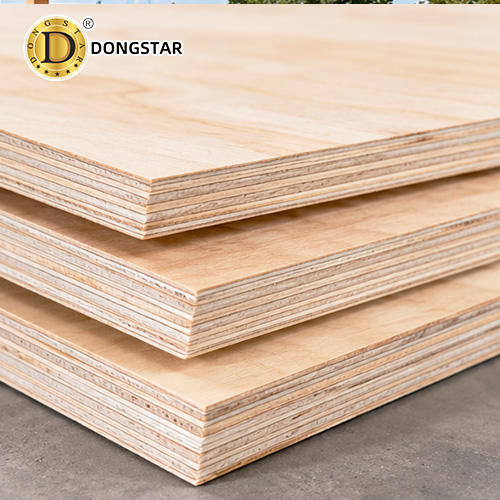
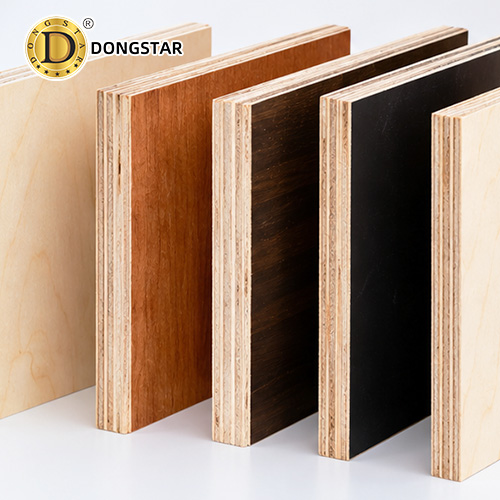
Plywood is a multi-layer wood panel made from thin veneers that are glued and pressed together. The veneers are normally arranged with their grain directions crossing between layers. This construction helps reduce the natural movement of solid wood and gives the panel better stability than a single piece of wood of comparable size.
A typical plywood sheet consists of:
- Face veneer
- Core veneers
- Back veneer
- Adhesive between veneer layers
The exact structure depends on the plywood type and specification.
For B2B buyers, plywood should therefore be treated as a configurable engineered panel rather than a single standard product. A supplier can produce different combinations of face species, core materials, glue types, grades, thicknesses and sheet dimensions for different markets and applications.
How Is Plywood Made?
The manufacturing process generally follows several key stages.
1. Log Preparation
Suitable logs are selected according to the required plywood specification. The wood species and log quality influence veneer appearance, density and processing characteristics.
2. Veneer Production
Logs are peeled or processed into thin wood veneers. Veneer thickness depends on the final plywood construction and target thickness.
3. Veneer Drying and Grading
The veneers are dried to an appropriate moisture level and sorted according to appearance and quality. This stage is important because excessive moisture can affect bonding and dimensional stability.
4. Veneer Assembly
The veneers are arranged into layers. The grain direction is normally alternated between adjacent layers to create the cross-laminated structure.
5. Glue Application
Adhesive is applied between veneer layers. Depending on the intended application, plywood can use different adhesive systems, including MR, melamine, WBP and phenolic glue.
6. Hot Pressing
The assembled veneers are pressed under controlled temperature and pressure. The process bonds the layers into a solid panel.
7. Cutting, Sanding and Inspection
The pressed panels are trimmed to the required dimensions and may be sanded according to the product specification. Quality inspection normally checks dimensions, surface appearance, bonding, moisture and other agreed requirements.
For bulk orders, buyers should confirm the complete specification with the manufacturer rather than judging plywood quality only from the surface appearance.
What Are the Main Types of Plywood?
Plywood is available in many forms because different industries require different combinations of appearance, strength, moisture resistance and cost.
Commercial Plywood
Commercial plywood is widely used for furniture components, cabinets, interior applications, packaging and general construction. It is one of the most common choices for buyers looking for a practical balance between performance and cost.
Furniture Plywood
Furniture plywood is selected for applications where panel appearance, dimensional stability and machining performance are important. It can be produced with different face veneers and core constructions depending on the furniture specification.
Birch Plywood
Birch plywood is known for its relatively uniform appearance, good strength and stable multi-layer construction. It is commonly considered for furniture, cabinets, interior components and applications requiring a higher-quality plywood surface.
Hardwood Plywood
Hardwood plywood uses hardwood species for the face, back, core or a combination of these layers. It is available in different grades and constructions for furniture, construction and industrial applications.
Film Faced Plywood
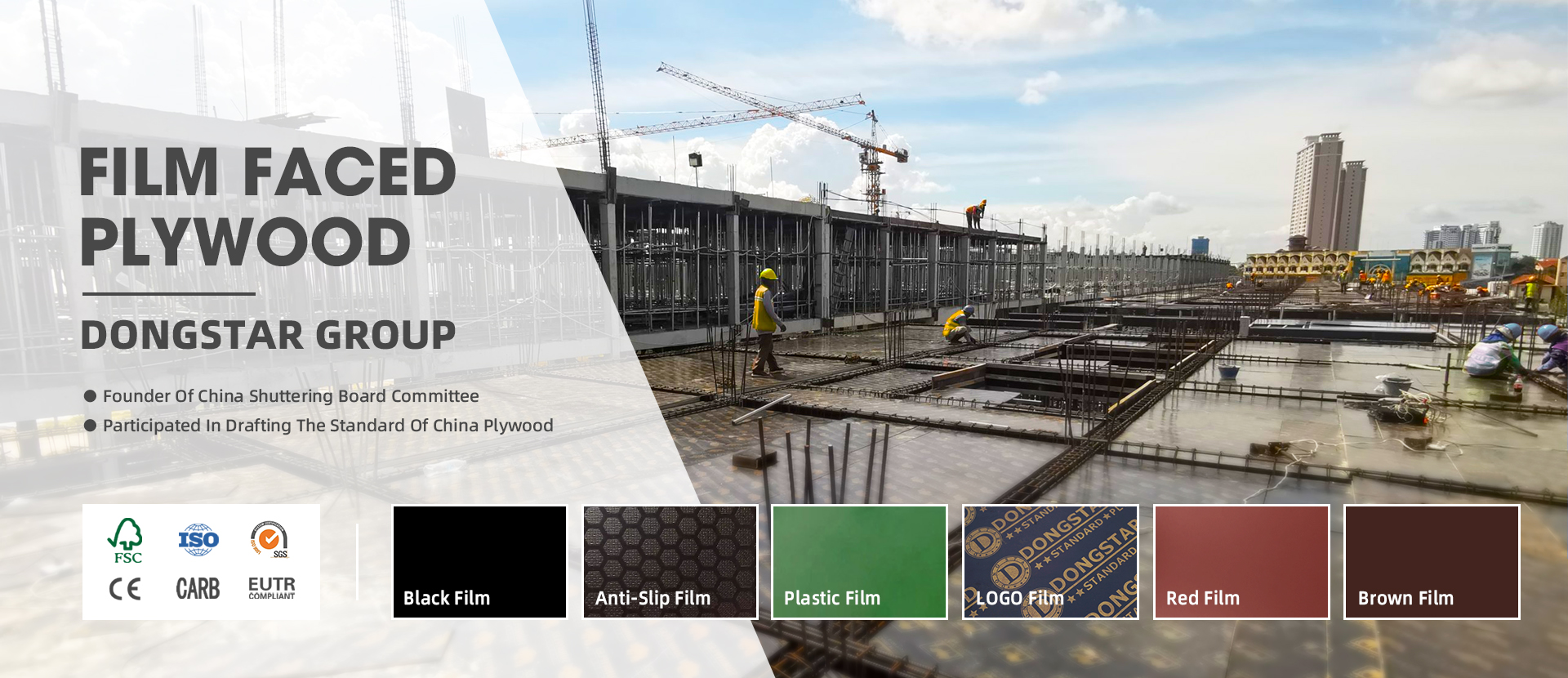
Film faced plywood has a resin-impregnated film applied to its surfaces. It is widely used for concrete formwork because the coated surface can provide a smooth concrete finish and improved resistance to moisture and repeated use when the correct specification and handling practices are applied.
Waterproof Plywood
Water-resistant or waterproof plywood uses suitable veneer construction and adhesive systems for applications exposed to moisture. Buyers should always confirm the actual glue type, standard and test requirements instead of relying only on the word “waterproof.”
What Sizes and Thicknesses Are Available?
Plywood is produced in a wide range of dimensions and thicknesses.
Common sheet dimensions include:
| Plywood Size | Typical Market Use |
|---|---|
| 1220 × 2440 mm | Widely used 4×8-related format |
| 1250 × 2500 mm | Common metric format |
| 1250 × 3000 mm | Larger panel applications |
| Custom sizes | Specific project or production requirements |
Thickness depends on the plywood construction and intended use. Dongstar’s current plywood range lists approximately 2.7–40 mm, with custom specifications available for bulk orders depending on product type.
The correct thickness should be selected according to the required strength, span, machining process, weight and application.
For example, 12 mm, 18 mm and 21 mm plywood can serve quite different purposes. A buyer should therefore avoid selecting a thickness based only on price.
For projects involving large quantities, it is also useful to compare the actual sheet dimensions with the cutting plan. A slightly larger sheet can sometimes reduce cutting waste and improve material utilization.
How Do Plywood Core and Glue Affect Performance?
Two of the most important factors in plywood specification are the core and glue.
Plywood Core
Common core options include:
- Birch
- Eucalyptus
- Poplar
- Pine
- Combi
- Mixed hardwood
The core affects the panel’s weight, strength, stability, machining performance and price.
For example, birch core plywood is often selected where a dense and relatively uniform multi-layer construction is required, while poplar or mixed-core plywood can be considered when weight and cost are important factors.
There is no single “best” plywood core for every project. The right choice depends on the specification and application.
Plywood Glue
Common adhesive options include:
- MR glue
- Melamine glue
- WBP glue
- Phenolic glue
- E0/E1/E2-related formaldehyde-emission specifications where applicable
MR generally refers to moisture-resistant applications, while WBP refers to water-boil-proof bonding performance under specified test conditions.
For construction and formwork applications, buyers may require a stronger water-resistant bonding system. For furniture or interior applications, emission requirements and surface finishing may become more important.
The supplier should provide the actual glue specification and relevant test or certification documents for the ordered product.
What Is Plywood Used For?
Plywood is used across construction, furniture manufacturing, interior decoration, packaging and industrial applications.
1. Furniture Manufacturing
Plywood can be used for:
- Cabinets
- Shelving
- Tables
- Furniture components
- Structural furniture parts
- Interior fixtures
The appropriate face grade, core, thickness and surface treatment depend on the finished product.
2. Construction
Construction plywood is used in applications such as:
- Walls
- Flooring
- Roofing
- Structural components
- General building work
- Temporary construction applications
The specification should be selected according to the structural and environmental requirements of the project.
3. Concrete Formwork
Film faced plywood is widely used for concrete formwork. Its coated surface is designed for demanding construction environments and can provide a smoother concrete finish than untreated plywood.
For large projects, buyers should evaluate the expected number of reuses, panel thickness, film type, core construction, edge sealing and handling method.
4. Interior Decoration
Plywood is also used for:
- Wall panels
- Ceiling applications
- Decorative components
- Interior fixtures
- Architectural elements
Face veneer and surface quality become particularly important when the plywood remains visible after installation.
5. Packaging and Industrial Applications
Plywood can be used to manufacture:
- Heavy-duty crates
- Boxes
- Industrial packaging
- Machinery components
- Transport packaging
The required thickness and strength should be matched to the weight and handling conditions of the packaged goods.
How Should B2B Buyers Choose Plywood?
For importers and wholesalers, a plywood quotation should never be compared by price alone.
Before placing a bulk order, confirm at least these specifications:
1. Plywood type
Commercial, furniture, birch, hardwood, film faced or another specification.
2. Sheet size
For example, 1220×2440 mm or 1250×2500 mm.
3. Thickness
Specify the required nominal thickness and acceptable tolerance.
4. Face and back grade
Confirm whether the requirement is A/C, BB/BB, BB/CC or another grade.
5. Core material
Ask whether the core is birch, eucalyptus, poplar, pine, combi or another construction.
6. Glue type
Confirm MR, melamine, WBP, phenolic or another adhesive specification.
7. Moisture requirement
The acceptable moisture range should be agreed before production.
8. Certification and compliance
If the destination market requires FSC, CE, CARB, EUTR or other documentation, confirm availability for the specific product and order.
9. Packaging and loading
Packaging, pallet configuration and container loading can affect the delivered cost.
10. Sample approval
For a large order, approve a sample or production specification before mass production whenever practical.
A professional plywood manufacturer should be able to discuss these points clearly and provide a quotation based on the same specification.
Why Source Plywood from Dongstar?
Dongstar supplies plywood for global B2B applications, including commercial, furniture, hardwood, construction and waterproof plywood. Its current product specifications include 1220×2440 mm, 1250×2500 mm, 1250×3000 mm and custom sizes, with thickness options listed at approximately 2.7–40 mm depending on the product.
Dongstar also provides different face species, core options, grades and glue systems, allowing buyers to specify plywood according to project requirements rather than purchasing a one-size-fits-all product.
The company identifies its base in Linyi, Shandong, China, and its website presents plywood alongside film faced plywood, MDF, OSB, melamine board, particle board and other wood-panel products.
For international buyers, this broader product range can be useful when a project requires several types of wood panels from the same supply chain.
If you are sourcing plywood for a construction project, furniture production, wholesale distribution or import business, provide the required size, thickness, face grade, core, glue, quantity and destination market when requesting a quotation. A detailed specification allows the manufacturer to recommend the appropriate plywood construction and quote more accurately.
Plywood FAQs
Is plywood stronger than solid wood?
Plywood and solid wood have different structures and performance characteristics. Plywood’s cross-laminated construction provides good dimensional stability and strength for many applications, but the appropriate material depends on the project requirements.
What is the most common plywood size?
1220×2440 mm is a widely used plywood format, while 1250×2500 mm is also common in metric markets. Other dimensions, including 1250×3000 mm and custom sizes, are available depending on the manufacturer and order specification.
What is the best plywood thickness?
There is no single best thickness. The correct thickness depends on the application, load, span, machining requirements and installation method.
What is the difference between commercial and film faced plywood?
Commercial plywood is commonly used for furniture, interior and general-purpose applications. Film faced plywood has a coated surface and is widely used for concrete formwork and construction applications.
Which plywood core is best?
The appropriate core depends on the application, required strength, weight, appearance and budget. Birch, eucalyptus, poplar, pine and combi cores are all used for different plywood specifications.
Can plywood manufacturers produce custom sizes?
Yes. Many manufacturers can produce custom dimensions for suitable bulk orders. Buyers should confirm the available size, tolerance, minimum order quantity and production requirements before ordering.
What should I ask a plywood supplier before buying?
Ask about plywood type, size, thickness, face and back grade, core, glue, moisture, certifications, packaging, MOQ, production lead time and inspection procedures. For large orders, sample approval is also recommended.
Final Takeaway
Plywood is not simply a wood sheet. Its performance is determined by the combination of veneer species, core construction, adhesive, grade, thickness and manufacturing quality.
For global B2B buyers, the most reliable approach is to define the required specification first and then compare suppliers on quality consistency, production capability, documentation, packaging and total procurement cost.
For bulk plywood sourcing, Dongstar provides multiple plywood specifications and related wood-panel products for construction, furniture, interior and industrial applications.
Recommended Reading from Dongstar Blog
- Can You Order Custom Plywood Sizes and Thicknesses? A B2B Manufacturer Guide
- Plywood Sheets Wholesale Sizes: Standard & Custom Guide
- How Thick Is 3/4 Inch Plywood in mm? 1/2″ & 5/8″ Guide
- 1220×2440mm vs 1250×2500mm Plywood: Size Guide for Buyers
- 12mm vs 18mm Plywood: Which Thickness Should You Choose?
- What Is 18mm Plywood Used For? 12mm vs 21mm Plywood Applications for Projects
Post time: Sep-24-2026