

Plywood Sheet Dimensions Explained: Area, Cutting Yield & Container Planning for Bulk Buyers
Choosing the right plywood sheet dimensions is not simply a matter of selecting a standard size from a supplier’s catalog. For wholesalers, importers, furniture manufacturers and construction contractors, sheet dimensions can affect cutting efficiency, material waste, storage space and shipping costs.
A 1220×2440 mm sheet may work well for one production line, while a 1250×2500 mm panel may provide better material utilization for another. Larger formats can reduce joints in certain applications, but they may also require different handling and loading arrangements.
This guide explains how to compare plywood sheet dimensions, calculate panel area, estimate cutting yield and plan bulk orders more accurately.
Table of Contents
- Why Plywood Sheet Dimensions Matter for Bulk Buyers
- Common Plywood Sheet Dimensions
- How to Calculate Plywood Sheet Area
- How Sheet Dimensions Affect Cutting Yield
- Choosing the Right Plywood Size for Different Applications
- How Plywood Dimensions Affect Container Loading
- What to Specify When Ordering Plywood in Bulk
- Why Source Plywood from Dongstar
- Plywood Sheet Dimensions FAQs
Why Plywood Sheet Dimensions Matter for Bulk Buyers
Plywood sheet dimensions influence more than the amount of surface area covered by each panel.
For a furniture manufacturer, the right sheet size can improve cutting layouts and reduce offcuts. For a construction contractor, it may reduce the number of joints required. For an importer, sheet dimensions affect pallet size, container arrangement and warehouse storage.
A small difference in panel dimensions can become significant when purchasing thousands of sheets.
Before selecting a size, consider four factors:
- Production requirements: Does the sheet fit your cutting machines and production layout?
- Material utilization: How many finished components can be cut from one sheet?
- Handling: Can your warehouse and installation teams handle the panel safely?
- Logistics: How will the dimensions affect packaging, pallet arrangement and container loading?
The best plywood size is the one that works efficiently throughout your supply chain, not necessarily the largest or cheapest option.
Common Plywood Sheet Dimensions
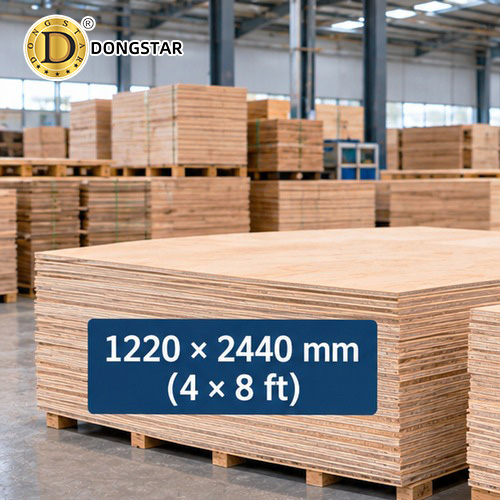
Several plywood dimensions are commonly used in international markets. Availability depends on the product type, manufacturer and order requirements.
| Nominal Format | Metric Dimensions | Approx. Sheet Area |
|---|---|---|
| 4×4 ft | 1220×1220 mm | 1.49 m² |
| 4×8 ft | 1220×2440 mm | 2.98 m² |
| 5×5 ft | 1525×1525 mm | 2.33 m² |
| 4×10 ft | 1220×3050 mm | 3.72 m² |
| 5×10 ft | 1525×3050 mm | 4.65 m² |
| Metric format | 1250×2500 mm | 3.125 m² |
| Metric format | 1250×3000 mm | 3.75 m² |
These figures are based on nominal dimensions. Actual finished dimensions and tolerances should be confirmed in the manufacturer’s technical specification.
For example:
- 1220×2440 mm is commonly associated with the 4×8 ft plywood format.
- 1250×2500 mm is a widely used metric format.
- 1250×3000 mm offers a longer panel for selected applications.
Dongstar lists 1220×2440 mm, 1250×2500 mm and 1250×3000 mm among its plywood formats, with customized sizes also available depending on the product specification.
How to Calculate Plywood Sheet Area
Calculating plywood sheet area helps buyers compare different sizes and estimate the material required for a project.
The basic formula is:
Sheet Area (m²) = Length (m) × Width (m)
For example:
| Plywood Dimensions | Calculation | Area |
|---|---|---|
| 1220×2440 mm | 1.22 × 2.44 | 2.9768 m² |
| 1250×2500 mm | 1.25 × 2.50 | 3.125 m² |
| 1250×3000 mm | 1.25 × 3.00 | 3.75 m² |
To calculate the total panel area:
Total Area = Sheet Area × Number of Sheets
For 1,000 sheets of 1220×2440 mm plywood:
2.9768 × 1,000 = 2,976.8 m²
This is the nominal panel area before cutting waste or production losses.
When comparing supplier quotations, buyers should consider the price per usable square meter rather than looking only at the price per sheet.
How Sheet Dimensions Affect Cutting Yield
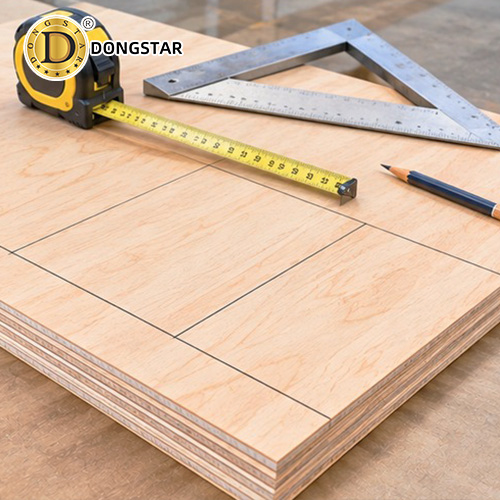
Cutting yield refers to how efficiently a plywood sheet can be converted into finished components.
Consider a furniture manufacturer producing cabinet panels, shelves or table components. A sheet that matches the cutting layout may produce more usable parts with fewer offcuts.
A larger sheet does not automatically provide better yield. The result depends on:
- Component length and width.
- Cutting direction and blade kerf.
- Required grain or veneer direction.
- Edge trimming requirements.
- Defects and rejected areas.
- Production equipment limitations.
For example, a manufacturer producing 600×800 mm components should compare cutting layouts using both 1220×2440 mm and 1250×2500 mm sheets.
The comparison should include the number of usable pieces, remaining offcuts and processing time.
A practical calculation is:
Material Utilization (%) = Usable Finished Area ÷ Original Sheet Area × 100
For a more accurate purchasing decision, ask your production team or plywood supplier to prepare a cutting layout before changing to a different sheet dimension.
Choosing the Right Plywood Size for Different Applications
Different applications require different panel dimensions.
Furniture Manufacturing
Cabinet manufacturers, furniture factories and OEM producers should select dimensions based on CNC table capacity, component sizes and cutting optimization. Consistent thickness and dimensional tolerance are also important for automated production.
Construction Projects
For wall panels, flooring components and general construction applications, buyers should consider coverage, handling and installation requirements. Structural applications must also meet the relevant grade and engineering standards.
Interior Decoration
Larger sheets can help reduce visible joints in wall cladding, ceiling panels and decorative installations. However, access, lifting and installation conditions should be checked before ordering oversized panels.
Packaging and Industrial Applications
For crates, machinery boxes and transport packaging, the sheet size should match the finished box design. Efficient cutting layouts can help reduce offcuts and improve material cost control.
For concrete formwork, specify the appropriate film faced plywood rather than assuming ordinary commercial plywood is suitable.
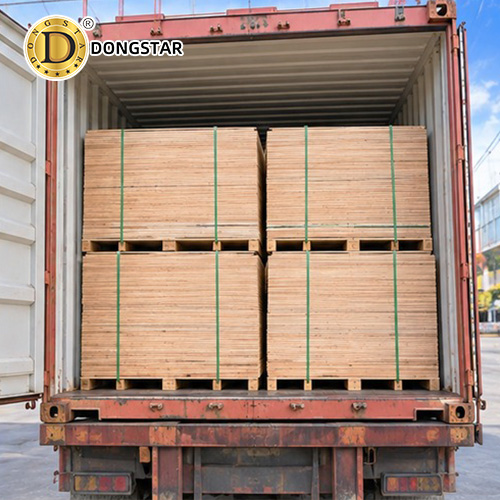
How Plywood Dimensions Affect Container Loading
For international plywood importers, panel dimensions are also a logistics consideration.
Sheet length and width affect pallet footprint and stacking arrangements, while thickness and density influence the total volume and weight of the shipment.
Before confirming a container order, ask the supplier for:
- Number of sheets per pallet.
- Pallet length, width and height.
- Gross and net shipment weight.
- Estimated container loading quantity.
- Container type and loading arrangement.
- Export packaging and edge protection.
Do not calculate container capacity from sheet area alone. The final loading quantity depends on panel thickness, density, pallet design, packaging, container dimensions and payload restrictions.
A loading plan based on the actual product specification is more reliable than a general estimate.
What to Specify When Ordering Plywood in Bulk
A complete plywood RFQ should include more than length and width.
Use the following checklist when requesting a factory quotation:
| Item | Information to Confirm |
|---|---|
| Product type | Commercial, furniture, film faced or other plywood |
| Sheet size | Length × width in mm |
| Thickness | Nominal thickness and tolerance |
| Face and back | Veneer species and grade |
| Core | Birch, Eucalyptus, Poplar, Pine, Combi or MLH |
| Glue | MR, Melamine, WBP or Phenolic |
| Surface | Sanded or unsanded |
| Quantity | Sheets, cubic meters or containers |
| Quality | Moisture, bonding and inspection requirements |
| Packaging | Pallet details and export protection |
| Destination | Country and applicable standards |
Buyers should also confirm whether the quoted dimensions refer to finished panel dimensions or nominal production dimensions.
For repeat orders, approve a physical sample and agree on inspection criteria before mass production.
Why Source Plywood from Dongstar
For international B2B buyers, a reliable plywood manufacturer should be able to provide clear specifications, consistent production and practical export support.
Dongstar’s plywood range includes commercial, furniture, hardwood and construction plywood in several sheet formats. Listed dimensions include 1220×2440 mm, 1250×2500 mm and 1250×3000 mm, alongside customized sizes depending on product requirements.
Available options include different face veneers, core materials, glue systems, grades and thicknesses.
For wholesalers, importers and project contractors, the important step is to match the product specification with the intended application and purchasing volume.
Visit the Dongstar Plywood product page to review product options, or contact Dongstar with your required dimensions, thickness, core, glue type and quantity.
Plywood Sheet Dimensions FAQs
What are the most common plywood sheet dimensions?
The 4×8 ft format, approximately 1220×2440 mm, is widely recognized. Other common options include 1250×2500 mm, 1250×3000 mm and various larger or customized dimensions.
How many square meters are in a 4×8 plywood sheet?
A nominal 1220×2440 mm sheet covers approximately 2.98 m².
Is 1250×2500 mm plywood larger than 1220×2440 mm?
Yes. A 1250×2500 mm sheet has approximately 3.125 m² of area, compared with approximately 2.9768 m² for 1220×2440 mm.
Does a larger plywood sheet reduce cutting waste?
Not necessarily. Cutting yield depends on component dimensions, cutting layout, blade kerf, grain direction and equipment capacity. A cutting plan is the best way to compare sheet sizes.
Can plywood manufacturers produce custom dimensions?
Many manufacturers can offer customized dimensions, depending on production equipment, product construction, material availability and order quantity. Confirm feasibility and tolerances before placing an order.
What should importers check before ordering plywood?
Confirm sheet dimensions, thickness tolerance, face and back grade, core material, glue type, quantity, packaging, inspection requirements and container loading details.
Final Buying Advice
Plywood sheet dimensions should be selected according to the actual production or project requirement.
A standard 4×8 panel may be the most convenient option for one buyer, while a metric or customized dimension may offer better cutting yield for another.
For bulk procurement, compare the total cost of usable material, not just the price per sheet. A clear specification and realistic loading plan can help reduce waste, avoid misunderstandings and support more consistent repeat orders.
Recommended Reading
Post time: Nov-26-2026