

1250×2500 Plywood: Specifications, Applications & Buying Guide for Bulk Buyers
For plywood importers, wholesalers, furniture manufacturers and construction contractors, choosing the right sheet format can affect material yield, production efficiency and shipping costs. 1250×2500 mm plywood is a metric sheet size worth considering when a project, cutting plan or customer specification requires a larger panel than the commonly used 1220×2440 mm format.
However, sheet dimensions alone do not define the product. Buyers also need to confirm thickness, core material, face and back grade, adhesive system, dimensional tolerance and packaging before placing a bulk order.
This guide explains what to check when sourcing 1250×2500 plywood from a manufacturer and how to prepare a clear request for quotation (RFQ).
Table of Contents
What Is 1250×2500 Plywood?
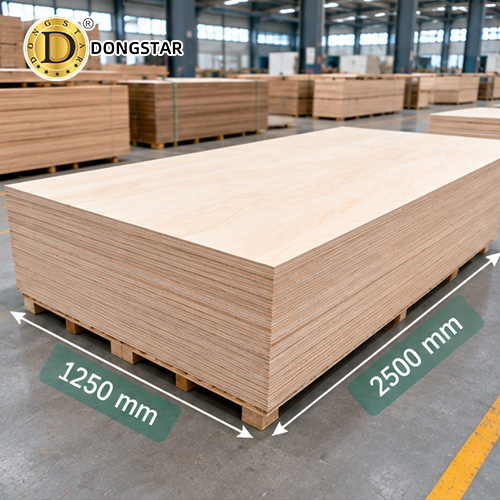
1250×2500 plywood is a plywood sheet with nominal dimensions of 1,250 mm in width and 2,500 mm in length. It is a metric format used for furniture manufacturing, interior components, construction and other panel-based applications.
Each sheet has a nominal surface area of:
1.25 m × 2.50 m = 3.125 m²
The format can be useful for production layouts designed around metric dimensions. Whether it is the best option for a particular project depends on the finished component sizes, cutting pattern, handling equipment and customer requirements.
For B2B buyers, it is important to specify the dimensions in millimetres on the purchase order rather than relying only on descriptions such as “large sheet” or “metric plywood.”
1250×2500 Plywood Specifications
The required construction depends on the intended application. A useful starting point is to define the product type, dimensions, thickness and surface requirements.
| Specification | What to Confirm |
|---|---|
| Sheet size | 1250×2500 mm |
| Thickness | Required nominal thickness and tolerance |
| Product type | Commercial, furniture, hardwood or film faced plywood |
| Face and back | Veneer species and grade |
| Core | Birch, eucalyptus, poplar, pine, combi or mixed hardwood, subject to availability |
| Glue system | MR, melamine, WBP or phenolic, as required |
| Surface | Sanded, unsanded, natural veneer or film faced |
| Quality requirements | Applicable standard and agreed inspection criteria |
| Packaging | Export pallet or bundle requirements |
| Quantity | Sheets, cubic metres or container quantity |
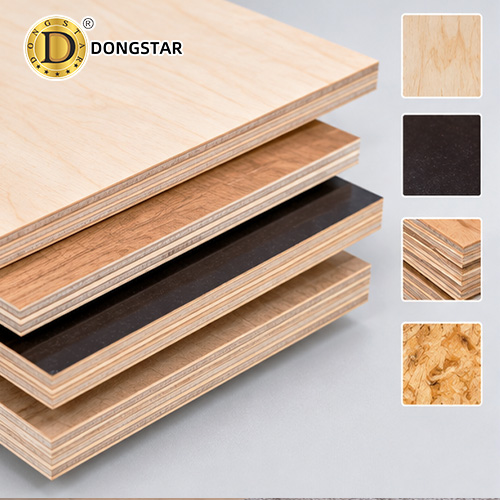
Dongstar’s plywood range lists 1250×2500 mm among its standard formats, alongside other sizes and customized options. The listed thickness range is approximately 2.7–40 mm, depending on product configuration. Buyers should confirm the exact specification and availability for their chosen plywood type.
View the Dongstar plywood product range for product options.
Available Thicknesses
The appropriate thickness depends on the load, support conditions, machining requirements and intended use. Common commercial thicknesses include 6 mm, 9 mm, 12 mm, 15 mm, 18 mm and 21 mm, although availability varies by construction and order specification.
| Nominal Thickness | Potential Applications |
|---|---|
| 6–9 mm | Lightweight panels, backing and selected interior components |
| 12 mm | Furniture components, partitions and general panel work |
| 15 mm | Furniture production and selected construction applications |
| 18 mm | Cabinets, furniture, flooring components and general-purpose panels |
| 21 mm and above | Applications requiring thicker panels, subject to engineering and product requirements |
These are general purchasing references, not engineering recommendations for every project. Structural applications must be specified according to the required grade, loading, span, support spacing, fastening method and relevant local standards.
When requesting a quotation, state both the nominal thickness and the required tolerance. Also confirm whether the specified thickness refers to a sanded finished panel.
For additional guidance, see Dongstar’s plywood sizes and thickness guide.
Core, Face and Glue Options
Two plywood sheets with the same dimensions can perform differently because their construction is not necessarily the same. For bulk procurement, the core, face and adhesive system should be specified alongside the sheet size.
Core material: Birch, eucalyptus, poplar, pine, combi and mixed hardwood cores may be available, depending on the product. Buyers should evaluate consistency, intended use and required performance rather than selecting a core by name alone.
Face and back veneer: The required species and appearance grade depend on whether the plywood will be visible, painted, laminated, covered or used as a substrate. State the face and back grades separately if they have different requirements.
Glue system: MR, melamine, WBP and phenolic systems serve different requirements. Do not assume that the word “waterproof” guarantees suitability for every exposure condition. Specify the applicable bonding standard or test requirement and intended service environment.
Surface finish: Sanded, unsanded, natural veneer and film-faced panels serve different purposes. The selected finish should match the next manufacturing or installation step.
For more information, review Dongstar’s plywood core options and plywood glue options.
1250×2500 Plywood Applications
Furniture Manufacturing
The metric sheet format can suit cabinet components, shelves, furniture panels and other parts when the cutting layout is designed around the available sheet dimensions. Manufacturers should test their nesting plan before switching formats for a high-volume order.
Interior Fit-Out and Panel Production
Larger panels may be useful for wall components, partitions, decorative substrates and interior joinery. Surface grade, thickness consistency and finishing requirements should be agreed before production.
Construction and General Panel Applications
Plywood may be used for selected construction components, temporary works and general site applications. The appropriate product depends on the required strength, exposure conditions, panel grade and project specification.
Industrial and OEM Manufacturing
Businesses producing repeat components may benefit from a consistent sheet specification across multiple orders. For OEM programs, buyers should document the approved construction, dimensions, tolerances and quality criteria to support repeatability.
The sheet size should always be selected around the finished application. A larger format is useful only when it fits the production process and handling requirements.
Material Yield and Shipping
The nominal area of one 1250×2500 mm sheet is 3.125 m². This helps buyers estimate theoretical panel area, but it does not tell the whole cost story.
For a meaningful comparison, calculate the usable material after cutting waste. Consider whether the sheet dimensions fit the cutting pattern, how many finished components can be produced from each sheet, and whether offcuts can be reused.
Shipping also deserves attention. A different sheet format can affect pallet dimensions, stack height, handling, storage and container loading. Before confirming a bulk order, ask the supplier to provide the proposed packing method, sheets per bundle, pallet dimensions, gross weight and estimated container loading.
If you are comparing 1250×2500 mm with 1220×2440 mm, use Dongstar’s plywood sheet size comparison guide. The best choice depends on material yield and total delivered cost, not simply the area of one sheet.
How to Buy 1250×2500 Plywood
A complete RFQ makes it easier for manufacturers to quote the same product and reduces the risk of specification gaps.
Include the following details:
- Product type: Commercial, furniture, hardwood, film faced or another defined plywood type.
- Dimensions: 1250×2500 mm, with any required dimensional tolerance.
- Thickness: Nominal thickness and acceptable variation.
- Construction: Core material, face/back veneer and grades.
- Adhesive: Required glue system and relevant performance standard.
- Surface: Sanded, unsanded, natural veneer or film faced.
- Quantity: Total sheets, cubic metres or container requirement.
- Quality control: Required tests, sample approval and inspection criteria.
- Packaging: Export packing, pallet requirements and labeling.
- Destination: Country, port and any applicable import or project requirements.
Before mass production, confirm the specification in writing and approve a sample when appropriate. If the order requires a particular tolerance or certification, make sure it is documented and applicable to the exact product being purchased.
Choosing a Plywood Manufacturer
A competitive unit price is only one factor in bulk sourcing. Buyers should also assess whether a manufacturer can supply the required construction consistently and support the order from sampling through shipment.
Ask potential suppliers:
- Can you supply 1250×2500 mm in the required thickness and construction?
- What dimensional and thickness tolerances can you commit to?
- Can you provide a sample and written technical specification?
- How are product quality and dimensions inspected?
- Can you meet the required packaging and shipment schedule?
- Can you support repeat orders using the same approved specification?
Dongstar supplies plywood options for international B2B applications. To request a quotation, send your required product type, thickness, core, face/back grade, glue system, quantity and destination through the Dongstar contact page.
1250×2500 Plywood FAQs
How many square metres are in a 1250×2500 plywood sheet?
One nominal sheet covers 3.125 m², calculated as 1.25 m multiplied by 2.50 m. Actual usable material will be lower if trimming or cutting waste is involved.
What thicknesses are available in 1250×2500 plywood?
Common commercial thicknesses include 6, 9, 12, 15, 18 and 21 mm. The available range depends on plywood type, construction, manufacturing capability and order requirements.
Is 1250×2500 plywood suitable for furniture manufacturing?
It can be suitable for furniture panels and components when the sheet format, core, surface grade and thickness meet the production requirements. Buyers should test the cutting layout before switching to a new format.
Can I order 1250×2500 plywood with a specific core and glue system?
Yes, subject to product availability and manufacturing capability. Include the core, face/back grade, adhesive requirements and applicable standards in the RFQ.
What should I confirm before placing a wholesale order?
Confirm the complete specification, tolerances, quantity, sample approval, inspection criteria, packaging, delivery schedule and destination requirements.
How can I compare quotations from different plywood suppliers?
Compare like-for-like specifications, including sheet dimensions, thickness, core, veneer grade, adhesive system, tolerances, packaging and delivery terms. For production use, also calculate cost per usable square metre.
Final Advice for Bulk Buyers
1250×2500 plywood can be a practical option for metric-based furniture, interior, construction and OEM requirements. The key is to select the format based on the finished application and confirm the complete technical specification before production.
For a reliable comparison between suppliers, request quotations using the same product details and evaluate material yield, quality requirements, packing and total delivered cost. This gives importers, wholesalers and project buyers a stronger basis for making purchasing decisions.
Existing Dongstar blogs recommended for further reading
1. 1220×2440mm vs 1250×2500mm Plywood: Size Guide for Buyers
2. Plywood Sizes & Thickness: Standard Sheet Dimensions Guide 2026
3. Standard Plywood Sheet Sizes: 4×8, 1220×2440mm & More | 2026 Guide
4. What Is Plywood? Types, Uses & Buying Guide | Dongstar
5. What Is Plywood Made Of? Plywood Layers, Veneers & Core Explained
6. Can You Order Custom Plywood Sizes and Thicknesses? A B2B Manufacturer Guide
Post time: Oct-28-2026