


What Plywood Thicknesses Are Available? A Complete Guide for Bulk Buyers
Plywood is available in a wide range of thicknesses, from thin panels for furniture backing and interior components to heavy-duty sheets for construction and industrial applications.
For importers, wholesalers, furniture manufacturers and project contractors, choosing the right plywood thickness is an important purchasing decision. It affects panel rigidity, weight, machining, material cost and suitability for the intended application.
But thickness alone does not determine plywood quality. Core construction, veneer species, glue type and manufacturing tolerances also matter.
This guide explains common plywood thicknesses, their typical applications and what B2B buyers should confirm before placing a bulk order.
Table of Contents
- What Plywood Thicknesses Are Available?
- Plywood Thickness Chart: Common Sizes in mm
- How to Choose Plywood Thickness by Application
- Nominal vs Actual Plywood Thickness
- What Affects Plywood Thickness and Performance?
- How to Check Plywood Thickness Before Ordering
- How to Specify Plywood Thickness in a Bulk Order
- Plywood Thickness FAQs
What Plywood Thicknesses Are Available?
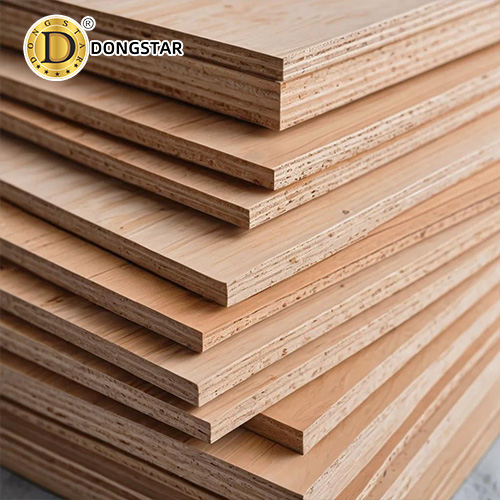
Plywood manufacturers produce panels in different thicknesses to meet furniture, construction, packaging, interior decoration and industrial requirements.
Common commercial plywood thicknesses include:
- 3 mm and 4 mm
- 5 mm and 6 mm
- 9 mm
- 12 mm
- 15 mm
- 18 mm
- 21 mm
- 25 mm
- 30 mm and above
The available range depends on the plywood type, veneer construction, manufacturing equipment and order quantity.
At Dongstar, the listed plywood product range covers approximately 2.7–40 mm, depending on the product configuration. Custom thickness requirements can also be discussed for suitable products and production orders.
For bulk buyers, it is important to distinguish between the thickness a factory can produce and the thickness it regularly stocks. A less common specification may require a different production arrangement or minimum order quantity.
Plywood Thickness Chart: Common Sizes in mm
The following chart provides a practical reference for common plywood thicknesses and their typical commercial applications.
| Thickness | Common Applications |
|---|---|
| 3–4 mm | Cabinet backs, drawer bottoms and lightweight panels |
| 5–6 mm | Furniture backing, decorative panels and interior lining |
| 9 mm | Furniture components, partitions and packaging |
| 12 mm | Cabinet components, shelving and general interior applications |
| 15 mm | Furniture structures, flooring components and packaging |
| 18 mm | Cabinets, furniture, shelving and selected construction applications |
| 21 mm | Heavy-duty furniture components and selected formwork products |
| 25 mm | Industrial panels and applications requiring greater panel thickness |
| 30–40 mm | Specialized, heavy-duty or customized applications |
These are general application references, not universal engineering specifications. The appropriate thickness depends on panel grade, core construction, load, support spacing, fixing method and relevant project requirements.
A thicker panel is not automatically stronger in every situation. A well-manufactured panel with suitable core construction and bonding may perform better than a thicker panel with inconsistent internal quality.
How to Choose Plywood Thickness by Application
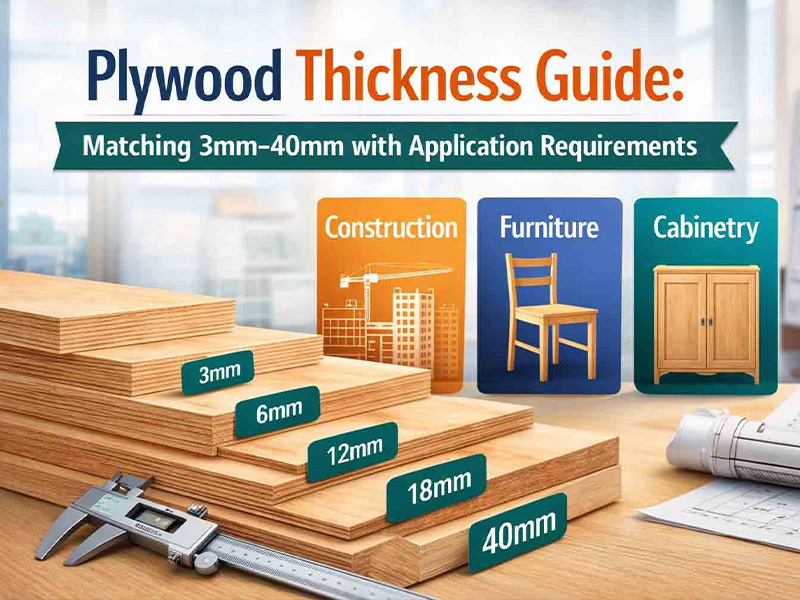
Different industries have different thickness requirements. Buyers should select plywood according to the finished product or project rather than choosing the thickest available option.
1. Furniture Manufacturing
Furniture manufacturers commonly use 9 mm, 12 mm, 15 mm and 18 mm plywood, depending on the component.
- 9 mm: Selected furniture components and backing applications.
- 12 mm: Cabinet components, shelving and partitions.
- 15 mm: Furniture structures requiring additional rigidity.
- 18 mm: Cabinet carcasses, shelves, tables and general furniture panels.
Face veneer quality, core uniformity and thickness consistency are particularly important for CNC processing and automated production.
2. Construction Applications
Construction plywood requirements vary according to the application.
Panels around 12–18 mm may be considered for certain general building and interior applications, while thicker panels may be specified for particular structural requirements.
For concrete formwork, buyers should specify suitable film faced plywood rather than assuming ordinary commercial plywood is appropriate.
Structural applications must be designed and specified according to the required load, span, support spacing and applicable standards.
3. Interior Decoration
Thin plywood panels such as 3–6 mm are commonly considered for lightweight decorative applications, backing and interior lining.
For visible wall panels, furniture surfaces and decorative components, buyers should also pay attention to face veneer, surface sanding and finishing requirements.
4. Packaging and Industrial Use
Packaging manufacturers may use 6–15 mm plywood for crates, boxes and protective panels, depending on the product weight and handling conditions.
Heavier industrial applications may require thicker panels or a different plywood construction.
The best specification balances strength, weight, cutting efficiency and material cost.
Nominal vs Actual Plywood Thickness
One of the most important details in plywood procurement is the difference between nominal thickness and actual measured thickness.
The nominal thickness is the specified product size used in the quotation or product description. Actual thickness is the measurement of the finished panel.
For example, a buyer may request 18 mm plywood. The factory should confirm the agreed finished thickness and its acceptable manufacturing tolerance.
Actual measurements can be influenced by:
- Veneer thickness and construction.
- Hot-pressing conditions.
- Sanding and calibration.
- Moisture content.
- Manufacturing tolerances.
Buyers should not assume that every supplier uses the same thickness tolerance.
For large orders, clearly define the nominal thickness, acceptable tolerance, measurement method and inspection requirements in the purchase specification.
What Affects Plywood Thickness and Performance?
Two plywood sheets with the same nominal thickness may have different performance characteristics.
The main factors include:
Core Construction: Birch, eucalyptus, poplar, pine, combi and mixed hardwood cores can have different density, strength and machining characteristics.
Veneer Quality: Veneer thickness, defects and layer arrangement influence panel consistency and finished quality.
Glue System: MR, melamine, WBP and phenolic adhesive systems are selected according to different bonding and moisture-resistance requirements.
Manufacturing Process: Veneer drying, lay-up, hot pressing, trimming and sanding all influence the finished panel.
Panel Density: Density affects weight and can influence handling, machining and mechanical performance.
For B2B buyers, a complete plywood specification is more useful than a thickness number alone.
How to Check Plywood Thickness Before Ordering
Thickness inspection should be part of the quality-control process for wholesale and project orders.
A practical inspection procedure includes:
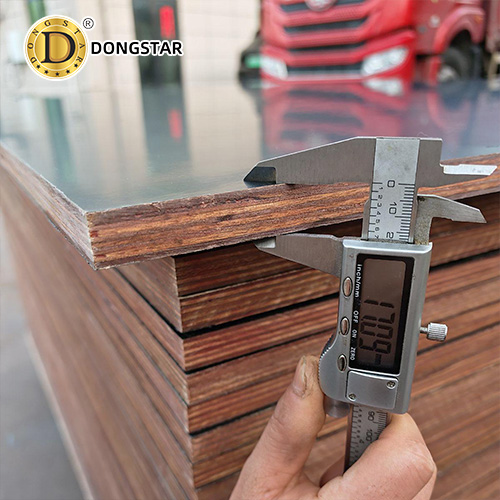
- Use a calibrated measuring instrument: A digital caliper or suitable thickness gauge can be used to measure panel thickness.
- Measure multiple positions: Check several points across the sheet rather than relying on one measurement.
- Check edge consistency: Look for noticeable variations, uneven sanding or visible construction defects.
- Compare with the agreed specification: Evaluate the results against the nominal thickness and written tolerance.
- Inspect a representative sample: Approve samples before mass production when thickness consistency is critical.
For large orders, buyers should agree on sampling frequency, inspection methods and acceptance criteria before production begins.
Third-party inspection can also be considered when required by the buyer or project contract.
How to Specify Plywood Thickness in a Bulk Order
A quotation request should include more information than simply stating the required thickness.
Use this checklist when contacting a plywood manufacturer:
| Specification | Example |
|---|---|
| Product | Commercial Plywood |
| Sheet Size | 1220×2440 mm |
| Thickness | 18 mm |
| Face/Back | Birch / Poplar |
| Grade | BB/CC |
| Core | Eucalyptus or Combi |
| Glue | MR or WBP |
| Surface | Double-sided sanded |
| Quantity | Required sheets or containers |
| Tolerance | As agreed in the purchase specification |
| Packaging | Export standard |
| Destination | Country or destination port |
For custom orders, also confirm the production feasibility, minimum order quantity, sample approval process and expected lead time.
If you are comparing multiple suppliers, send the same specification to each manufacturer. This makes quotations easier to evaluate and reduces misunderstandings during mass production.
Plywood Thickness FAQs
What is the most common plywood thickness?
Commonly purchased thicknesses include 9 mm, 12 mm, 15 mm and 18 mm. The most suitable option depends on the application and required panel performance.
What plywood thickness is best for furniture?
12 mm, 15 mm and 18 mm are frequently considered for furniture components. The correct choice depends on the furniture design, support structure, load and machining requirements.
Is thicker plywood always stronger?
No. Thickness is only one factor. Core quality, veneer construction, adhesive bonding, panel grade and manufacturing consistency also affect performance.
What is the maximum plywood thickness available?
It depends on the manufacturer and product configuration. Dongstar lists plywood thickness options of approximately 2.7–40 mm across its product range, subject to the specific construction and order requirements.
Can I order custom plywood thickness?
Yes, customized thicknesses may be possible depending on the factory’s production capability, plywood construction and order quantity. Confirm availability, tolerance and MOQ before ordering.
How do I check the actual thickness of plywood?
Use a calibrated digital caliper or suitable thickness gauge. Measure multiple positions on the panel and compare the results with the agreed specification and tolerance.
What is the difference between plywood thickness and plywood grade?
Thickness describes the panel’s physical measurement. Grade generally describes the quality or appearance classification of the face and back veneers, according to the relevant grading system. They are separate specifications.
Final Buying Advice
Choosing plywood thickness should start with the intended application, not simply the price per sheet.
For wholesalers, importers and project contractors, the right purchasing decision combines thickness, core material, veneer quality, glue system and manufacturing tolerance.
A clear specification helps manufacturers provide comparable quotations and maintain consistent quality across repeat orders.
If you are sourcing plywood in bulk, contact Dongstar with your required dimensions, thickness, core, glue type and quantity to discuss suitable product options.
Recommended Reading
Post time: Nov-27-2026