
Oriented Strand Board vs Plywood, most project owners focus on price first—and that’s exactly where costly mistakes begin.
Here’s the reality:
Both materials look similar at a glance, but they behave very differently when exposed to moisture, heavy loads, or long-term wear.
If you’re working on a construction, renovation, or large-scale project, this guide will help you avoid expensive errors and choose the right material the first time.
What Is Oriented Strand Board (OSB)?
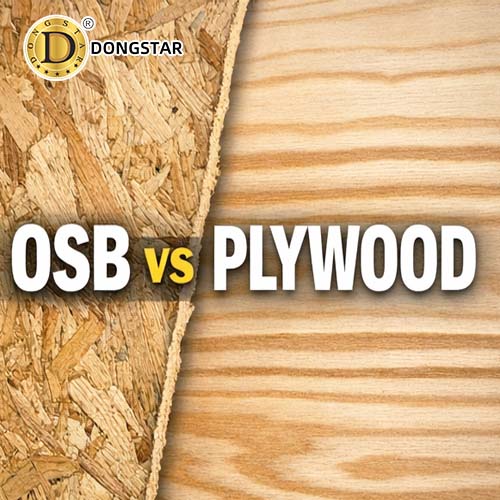
Oriented Strand Board (OSB) is an engineered wood panel made by compressing layers of wood strands with adhesives.
How OSB Is Manufactured
OSB is produced by:
- Cutting wood into thin strands
- Arranging them in specific orientations
- Bonding them with heat and resin
This creates a dense, uniform panel widely used in modern construction.
Why OSB Became Popular
OSB gained traction because:
- It uses fast-growing trees (lower cost)
- It’s more affordable than plywood
- It offers consistent quality across sheets
That’s why large builders often choose OSB for budget-sensitive projects.
What Is Plywood?
Plywood is a traditional building material made from thin layers of wood veneer glued together in alternating directions.
Cross-Layered Structure
This cross-grain design gives plywood:
- Higher strength
- Better flexibility
- Resistance to cracking and warping
Why Contractors Still Prefer Plywood
Despite higher cost, plywood is often chosen for:
- High-end construction
- Furniture and cabinetry
- Moisture-prone environments
Oriented Strand Board vs Plywood: Key Differences
1. Strength and Structural Integrity
- Plywood: stronger and more rigid
- OSB: consistent but slightly less stiff
For heavy loads → plywood wins
2. Moisture Resistance and Swelling
This is where most mistakes happen.
- OSB absorbs water slowly but retains moisture longer
- Plywood dries faster and returns to shape
For humid or wet conditions → plywood is safer
3. Cost Comparison in 2026
OSB typically costs:
- 15–35% less than plywood
That’s why:
- Developers prefer OSB
- DIY users often start with OSB
4. Weight and Installation
- OSB: heavier, harder to handle
- Plywood: lighter and easier to cut/install
5. Nail and Screw Holding Power
- Plywood offers better grip
- OSB can loosen over time under stress
Pros and Cons of OSB vs Plywood
OSB Pros
- Lower price
- Efficient material usage
- Uniform panels
OSB Cons
- Poor moisture recovery
- Heavier sheets
- Rough edges after cutting
Plywood Pros
- Strong and durable
- Better moisture resistance
- Smooth surface for finishing
Plywood Cons
- Higher cost
- Natural wood defects possible
Best Use Cases for OSB vs Plywood
Subflooring
- OSB → budget-friendly subfloors
- Plywood → premium, long-lasting floors
Roofing & Wall Sheathing
- OSB → widely used in mass construction
- Plywood → better in high-moisture climates
Furniture & Interior Projects
- OSB → hidden structures only
- Plywood → cabinets, shelves, visible surfaces
OSB vs Plywood for Subfloor: What Pros Recommend
Most contractors agree:
- Use OSB for dry, controlled environments
- Use plywood where moisture or long-term durability matters
Subfloor failures often happen due to moisture—not load.
Long-Term Cost vs Short-Term Savings
Let’s break it down simply:
| Factor | OSB | Plywood |
|---|---|---|
| Initial Cost | Lower | Higher |
| Maintenance | Higher | Lower |
| Lifespan | Shorter | Longer |
Conclusion:
Saving upfront may cost more later.
Expert Buying Tips (Project-Based Decisions)
Before choosing, ask yourself:
- Will this area get wet or humid?
- Is strength or cost more important?
- Is the material visible or hidden?
These answers determine the right material—not just price.
Frequently Asked Questions (FAQs)
1. Which is better: OSB or plywood?
Plywood is better for durability; OSB is better for cost savings.
2. Is OSB waterproof?
No. It resists water initially but can swell permanently.
3. Why is OSB cheaper than plywood?
It uses smaller, fast-growing wood materials and less processing.
4. Can OSB replace plywood?
Yes, in dry structural applications.
5. What is best for subflooring?
OSB for budget, plywood for durability.
6. Does plywood last longer than OSB?
Yes, especially in humid environments.
External Resource (Recommended Reading)
For deeper technical comparison, check this guide:
https://www.bobvila.com/articles/osb-vs-plywood/
Final Verdict: OSB or Plywood?
If your project is:
- Cost-driven → OSB
- Performance-driven → Plywood
In most professional builds, plywood wins when durability matters.
Post time: Apr-13-2026