


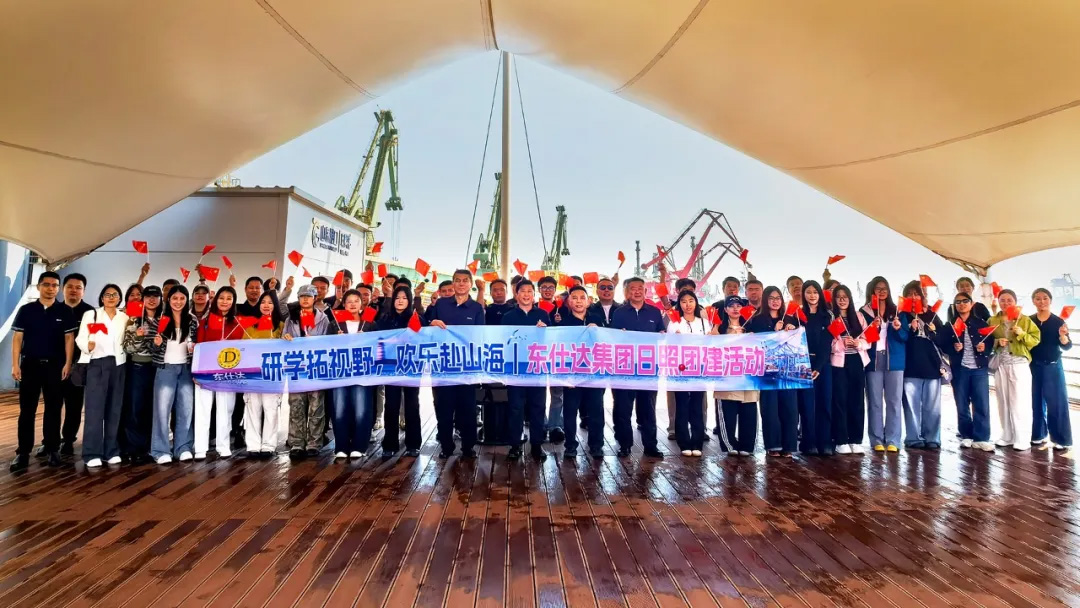
On September 29, 2026, Dongstar Group organized a field visit to Rizhao Port in Shandong Province, China, bringing its international sales team closer to the real-world logistics process behind global exports.
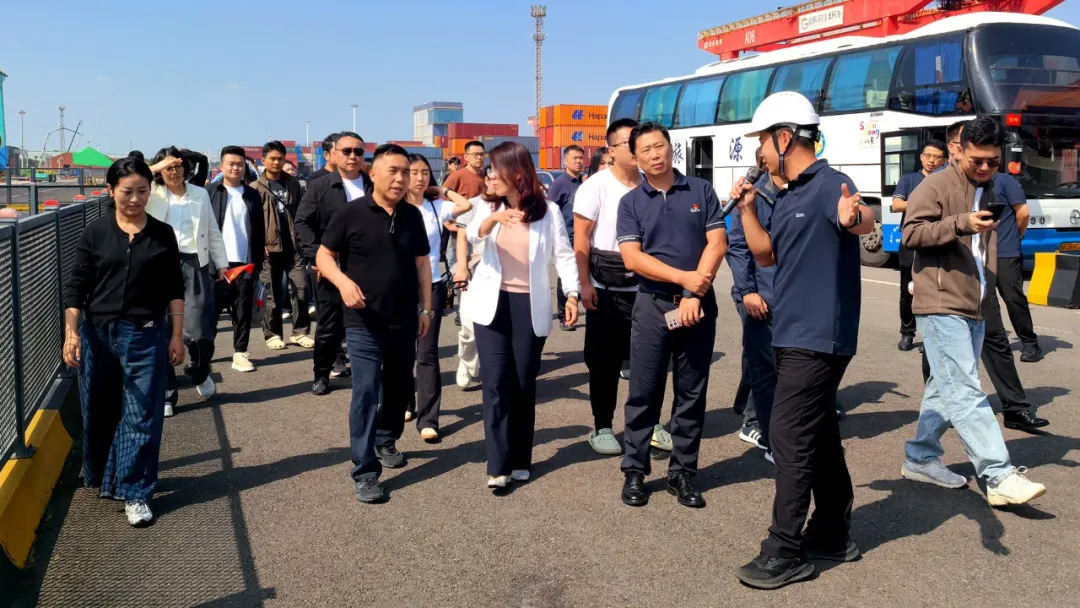
The visit combined professional learning, on-site observation and communication with the port. The team received a warm welcome from the management and staff of Rizhao Port, while port specialists provided detailed explanations of container yard planning, terminal handling procedures, shipping line container management and automated port equipment.
For many members of the sales team, the visit offered their first opportunity to see, in person, the complete journey of an export shipment—from entering the port and container yard to being loaded onto a vessel and shipped overseas.
Why Does Dongstar Take Its Sales Team to the Port?
For an international sales professional, words such as order number, container number, vessel schedule, booking, gate-in and loading appear every day in emails and shipping documents.
But what actually happens behind those terms?
Dongstar Group has more than 30 years of experience in the wood panel and building materials industry. Its businesses cover products including film faced plywood, commercial plywood, MDF, melamine board, OSB, formwork systems and accessories, and WPC products.
Dongstar products are exported to customers in more than 170 countries and regions across Latin America, the Middle East, Southeast Asia, Europe, North America, Japan, South Korea, Africa and other markets.
In 2026, Linyi Dongstar Import & Export Co., Ltd. was included in the Shandong Provincial Export Brand Enterprise list, reflecting the company’s continued development in international trade and export branding.
For a company serving global project buyers, wholesalers, importers and distributors, international logistics is an essential part of the customer experience.
That is why Dongstar believes that sales professionals should not only understand the products they sell, but also understand how those products move from a factory in China to a customer’s warehouse or project site overseas.

From Linyi to the Port: Seeing the Export Supply Chain Firsthand
Linyi is one of China’s major wood panel manufacturing centers, while Rizhao Port is an important maritime gateway serving the region.
The visit was designed to help Dongstar’s sales team understand the physical logistics process behind the export orders they manage every day.
A plywood order does not end when production is completed.
The actual export process may involve:
Production → Quality Inspection → Packaging → Container Booking → Empty Container Pickup → Loading → Port Gate-in → Customs Clearance → Terminal Handling → Vessel Loading → Ocean Transportation → Destination Port → Delivery
Seeing this process at the port made these steps much more tangible.
Terms that once existed mainly in emails and shipping documents became real operations taking place in front of the team.
Following an Export Container Through the Port
At the container yard, the port team explained the journey of an export container step by step.
Shipping lines provide empty containers to designated container yards, where they are stored before being picked up for export orders.
After a vessel booking is confirmed, the exporter arranges the empty container pickup, loads the cargo and delivers the loaded container to the port.
The container then enters the terminal, goes through the necessary procedures and is eventually transferred to the quay for vessel loading.
For plywood and other wood-based panels, container management is particularly important.
Plywood is sensitive to moisture and can also be damaged by improper handling. The condition of the container therefore matters before cargo loading begins.
During the visit, the team learned that container conditions can vary between shipping lines and container yards. Factors such as container age, structural condition, door sealing and signs of moisture or damage can all affect cargo protection.
For an export sales team, understanding these details helps improve communication with logistics teams and customers when arranging shipments.
Understanding Container Condition Before Loading
One of the practical lessons from the visit was the importance of checking the container itself.
For moisture-sensitive products such as plywood, MDF, OSB and other wood-based panels, a container should be suitable for the cargo before loading.
A damaged or poorly sealed container may create unnecessary risks during transportation.
This is why container selection should not be considered only a freight-price issue.
When discussing a shipment with a customer, an experienced export team needs to consider several factors together:
- Shipping line
- Vessel schedule
- Freight cost
- Container availability
- Container yard
- Container condition
- Cut-off time
- Loading schedule
- Destination port
- Required shipping documents
The port visit gave Dongstar’s sales team a much clearer understanding of how these factors connect with one another.
Seeing Automated Port Operations in Action
The automated equipment at the terminal was another highlight of the visit.
Remote-controlled quay cranes performed container handling operations, while automated guided vehicles moved along planned routes within the terminal area.
The level of automation demonstrated how modern ports are using digital systems and automated equipment to improve operational efficiency, safety and cargo handling.
Rizhao Port has developed automated container terminal capabilities as part of its smart-port development.
For an export company, port efficiency is directly connected with the reliability of the international supply chain.
When cargo is handled efficiently and vessel schedules are managed effectively, exporters can better coordinate production, container loading and customer delivery schedules.
From Imported Logs to Exported Wood Panels
Rizhao Port also plays an important role in the regional wood industry.
Imported logs enter China through maritime channels and are transported to wood-processing centers such as Linyi, where raw materials can be processed into plywood and other wood-based panels.
These finished products can then be packed into containers and exported to customers around the world.
This creates an interesting connection between import and export:
Logs enter through the port → Wood is processed in Linyi → Finished panels are manufactured → Products return to the port → Plywood and building materials are exported worldwide
The port is therefore not simply a place where containers are loaded onto ships.
It is part of a larger industrial and supply-chain ecosystem connecting raw materials, manufacturing, international trade and overseas markets.
What Does FOB Really Mean?
The visit also helped the sales team better understand international trade terms.
For example, under FOB (Free On Board), the seller delivers the goods on board the vessel at the named port of shipment. Once the goods are loaded on board, the risk transfers to the buyer, while the buyer normally arranges the main ocean freight.
Under CIF (Cost, Insurance and Freight), the seller arranges and pays for the main ocean freight and insurance to the named destination port. However, the risk transfers to the buyer when the goods are loaded on board the vessel at the port of shipment.
This distinction is important.
A few letters on a quotation can represent significant differences in:
- Cost allocation
- Transportation responsibilities
- Insurance arrangements
- Risk transfer
- Documentation
- Final landed cost
For buyers importing plywood in container quantities, understanding the applicable Incoterms® rule is therefore an important part of evaluating an international quotation.
Why the Bill of Lading Matters
Another important part of international shipping is the Bill of Lading (B/L).
A Bill of Lading serves several important functions in ocean transportation, including providing evidence of the contract of carriage, acknowledging receipt of the cargo and, depending on its form, serving as a document of title.
For an export sales team, every Bill of Lading must be handled carefully.
Details such as:
- Shipper
- Consignee
- Notify party
- Port of loading
- Port of discharge
- Vessel name
- Container number
- Seal number
- Cargo description
- Package quantity
must be consistent with the shipment and other trade documents.
A small documentation error can create delays in cargo release, customs clearance or payment processing.
This is why international trade is not only about selling products. It is also about managing information accurately.
Choosing a Shipping Line Is More Than Choosing a Freight Rate
When booking a container, freight cost and vessel schedule are naturally important.
But they are not the only considerations.
The choice of shipping line may also determine the available container yard and the process for collecting the empty container.
For plywood and other wood-based panels, container condition deserves particular attention.
A lower freight rate does not necessarily compensate for cargo problems caused by an unsuitable container.
This is one of the practical lessons that became much clearer after the Dongstar team saw the container yards and port operations firsthand.
For experienced export professionals, logistics is part of product quality management.
The Port Is Part of the Last Mile of International Trade
From a factory in Linyi to a project site overseas, an export order passes through a long chain:
Quotation → Contract → Production → Quality Control → Customs Documentation → Vessel Booking → Container Loading → Port Gate-in → Customs Clearance → Vessel Loading → Ocean Freight → Destination Port → Final Delivery
The port is one of the most important physical links in this chain.
Before this visit, a phrase such as “estimated vessel departure” could easily remain just another line in an email.
After seeing containers being handled and loaded at the terminal, the meaning became much more concrete.
Behind every estimated shipping date is a coordinated logistics process involving factories, trucking companies, container yards, shipping lines, terminals, customs authorities and overseas customers.
Turning a Port Visit into Better Customer Service
For Dongstar’s international sales team, the value of this visit goes beyond learning how a port operates.
A better understanding of logistics helps sales professionals communicate more accurately with overseas customers.
When a buyer asks:
- When can the container be shipped?
- When should we arrange loading?
- Which shipping line will be used?
- When is the cut-off time?
- Where will the empty container be collected?
- When will the vessel depart?
- What documents will be provided?
the sales team can now connect these questions with the actual physical operations behind them.
That knowledge is especially valuable when supplying plywood and other building materials for international projects, wholesale distribution and large-volume imports.
From a Port Visit to Closer Cooperation
Dongstar Group sincerely appreciates the warm reception and professional support provided by the management and staff of Rizhao Port.
From the carefully arranged visit route and detailed explanations to discussions about container conditions, shipping-line operations and automated terminal equipment, the Rizhao Port team provided valuable practical knowledge for Dongstar’s international business team.
After the visit, Dongstar Group and Rizhao Port also held a friendly business meeting.
The two sides exchanged views on topics including container availability, container-yard coordination and vessel schedule connections, creating a foundation for closer cooperation in the future.
The visit was therefore more than an internal training activity.
It created an opportunity for a manufacturing and export company from Linyi and a major port in Shandong to better understand each other’s operations and explore ways to improve the logistics chain supporting international trade.
Helping Dongstar’s Team See How Products Reach the World
For an international building materials supplier, export is not simply about sending a quotation and receiving an order.
Every container represents a customer’s project, investment and delivery schedule.
Every plywood sheet packed into that container will eventually travel thousands of kilometers to reach a construction project, distributor, wholesaler or importer overseas.
The September 29 visit to Rizhao Port allowed Dongstar’s sales team to see that journey from a completely different perspective.
From the factory to the container.
From the container yard to the terminal.
From the terminal to the vessel.
And from China to customers around the world.
Going global is not the end of the journey. It is something that happens every day.
By bringing the classroom into the port, Dongstar hopes every member of its international business team will remember one simple principle:
Every product we sell carries the responsibility of delivering quality, reliability and service across borders.
Post time: Sep-30-2026