



Table of Contents
- The Real Cost You Are Not Calculating
- The Moisture Trap: Why Your Edges Are Failing
- Screw Holding Power and Load Capacity
- Weight vs. Transport: The Freight Calculation That Changes Everything
- Material Consistency and Cutting Waste
- Formaldehyde Compliance: The Silent Deal Breaker
- The Verdict: Which Board to Import and When
If you are an OSB importer or a plywood importer buying by the container load, you have probably been pitched the same line: “OSB is cheaper.” Then you find yourself dealing with swollen edges in a warehouse in Rotterdam or a client in Dubai complaining that the floor feels “bouncy.”
The choice between Oriented Strand Board (OSB) and plywood is not just a specification war. It is a margin game. For project contractors, wholesale distributors, and bulk importers, the wrong choice erodes your profit long before the complaint email arrives.
This is not a basic product description. This is a breakdown of the physical mechanics that hit your wallet.
The Real Cost You Are Not Calculating
Most purchasing managers stop at the price per cubic meter. That is the first mistake. As a bulk OSB supplier or plywood wholesaler, your real cost formula has three hidden variables: waste factor, lifespan of the structure, and fasteners required.
Plywood typically comes in a higher surface quality grade. If your coverage demands a Class 1 surface finish, cheap OSB will require topping. That price gap narrows instantly. But if you are supplying roof decking for a weathertight shell specification, modern OSB/3 or OSB/4 panels act as a structural diaphragm, and the raw material cost saving across 5,000 sheets on a project is pure margin.
You are not buying a board. You are buying a performance guarantee. Look at the span ratings, not just the thickness.
The Moisture Trap: Why Your Edges Are Failing
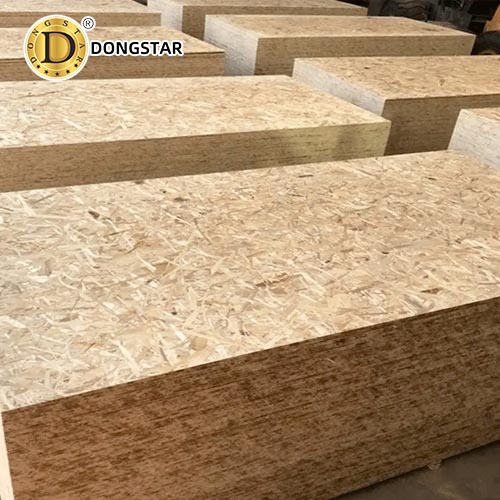
Here is a field reality most spec sheets avoid. Plywood dries in a linear, predictable way. Solid wood veneers expand and contract, but they return to shape. OSB is made of strands that trap water like a sponge. Once the edges of an OSB board swell beyond 15% moisture content, that deformation is permanent. You cannot sand it back. You have created thickness variation and a trip hazard.
For an importer supplying coastal or high-humidity regions like Southeast Asia or the Gulf, this edge-seal factor is critical. You need to specify a sealer on the cut edges of OSB immediately on site. If your workforce is not disciplined enough for that step, upgraded marine plywood with WBP glue is the only non-negotiable path. We have seen downgauged plywood outperform premium OSB solely because of edge handling discipline.
Screw Holding Power and Load Capacity
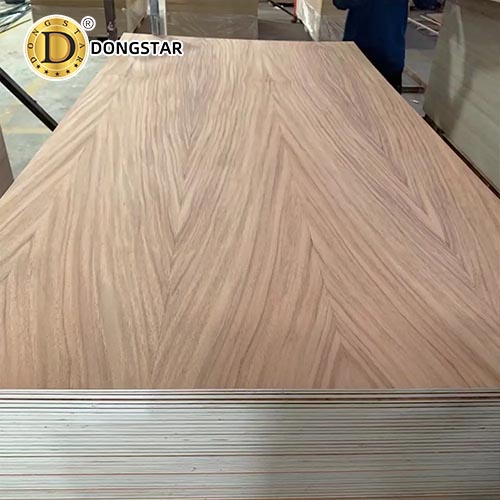
When a flooring client complains about squeaks, they are really complaining about the internal bond of the board. Plywood utilizes the long grain of the wood veneer. A screw biting into the face of quality poplar core plywood has a high pullout resistance throughout the lifespan of the building.
OSB relies on randomly oriented strands with wax and resin binders. The flake geometry is smaller. Under dynamic loads, these flakes can fracture around the thread of a screw. You hear that squeak. For a project builder using a plywood importer for subfloors, the premium they pay is usually because they cannot afford the acoustic issues of a fragmented core. If you are importing OSB for wall sheathing, racking strength is excellent, but for floors, demand high-density panels.
Weight vs. Transport: The Freight Calculation That Changes Everything
Standard OSB is heavier than softwood plywood of equivalent thickness because of the massive amount of adhesive and the compression ratio used in manufacturing. When you are booking containers from an Asian origin, weight is a cap just as strict as volume. If you can change a specification from pine plywood to a light-weight OSB composite, you might fit more square meters in a 40ft container. You are not just saving on the product; the freight cost per square meter drops, directly boosting your import margin.
Always check the density tolerance on the mill certificate. Variability in density means you are paying for inconsistent freight.
Material Consistency and Cutting Waste
A uniform 18mm panel whether plywood or OSB saves framing time. But they fail differently. Plywood can have interior core gaps. You rip a length of ply and find a void from a poorly laminated core. That entire section becomes scrap. This void risk is how a cheap plywood supplier kills your profitability.
OSB has zero internal voids. It is a homogenous mat. Every single cross-cut is consistent from edge to edge. If precision CNC routing is required for packaging crates, an OSB importer can promise zero void rejection rates. For framing carpenters, efficient cutting layouts on OSB sheets can reduce waste to 2%. With structural plywood, you might budget 5% to 7% cutting waste depending on the core quality. That differential pays for the container.
Formaldehyde Compliance: The Silent Deal Breaker
By now, most professional importers know about E1 or E0. But the EU and US regulations are tightening against added formaldehyde in structural panels. This is where plywood has inherent issues if the glue is not tight. Cheap urea-formaldehyde plywood off-gasses significantly.
OSB generally uses MDI or PMDI binders, which is a polyurethane-based glue. These are inherently low-emitting. If you market your OSB as “no added formaldehyde” boards, you unlock contracts in markets with sick building syndrome regulations. Do not ship a treated board without the CARB Phase II or TSCA Title VI certificate. A detained container over formaldehyde exceeds any price-per-sheet saving.
The Verdict: Which Board to Import and When
Specify structural plywood when the building code strictly maps “cross-laminated veneer” to seismic zones, or when the board remains exposed to weather during construction for longer than 3 months. Choose it when your end-user demands a sanded finish without sub-surfacing.
Specify OSB when you hold a project that needs a sheer panel at scale. Use it for SIP panel facings, bulk timber-frame sheathing, and packaging crates where uniformity eliminates inspection sorting costs. For a bulk OSB supplier, your selling point is the engineering certificate of consistent modulus of rupture and modulus of elasticity across the entire batch.
If you are sitting on a tender right now and the specification says “or equal equivalent,” push the structural OSB offer. The margin density on a well-bought OSB container outstrips commodity plywood nearly every time.
Recommended Reading from Dongstar Blog
- Aspenite vs Plywood: 7 Powerful Differences That Will Save Your Project Budget
- Plywood vs. OSB for Subfloor: Which is Better?
- Plywood Shelving Ideas: Simple & Stylish Storage Solutions
- The Best Board for Kitchen Cabinets: Melamine, Plywood, or Particle Board?
Post time: Apr-28-2026