


Table of Contents
- What Is MDF and Plywood?
- Strength Comparison: MDF vs Plywood
- When MDF Is Actually the Better Choice
- When Plywood Is the Better Option
- MDF vs Plywood: Side-by-Side Comparison
- Real-World Project Insight (What Contractors Say)
- Cost vs Performance: What Should You Choose?
- Common Mistakes Buyers Make
- FAQs
- Conclusion
If you’re planning a project—whether it’s cabinetry, furniture, or interior construction—you’ve probably asked this:
It’s one of the most searched questions in the building materials space right now. And honestly, the answer isn’t as simple as “yes” or “no.”
Here’s the quick takeaway:
Plywood is generally stronger and more durable than MDF
MDF is smoother, cheaper, and better for certain indoor uses
But depending on your project, MDF might still be the smarter choice.
Let’s break it down in plain terms—no fluff, just what you actually need to know before buying.
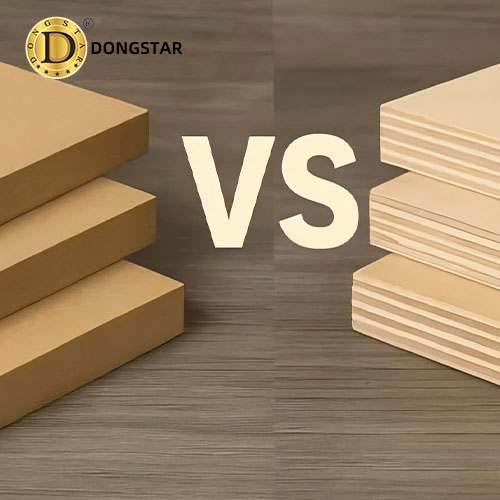
What Is MDF and Plywood?
Before comparing strength, it’s important to understand what each material really is.
MDF (Medium Density Fiberboard)
MDF is made by breaking down wood fibers, mixing them with resin, and pressing them into dense sheets.
Key traits:
- Smooth surface (great for painting)
- Uniform structure (no knots or grain)
- Lower cost than plywood
- Heavier than it looks
Plywood
Plywood is made by layering thin sheets (veneers) of wood, glued together with grains running in alternating directions.
Key traits:
- Strong structural integrity
- Better load-bearing capacity
- More resistant to cracking
- Handles moisture better than MDF
Strength Comparison: MDF vs Plywood
Let’s get straight to the point.
Which Is Stronger?
Plywood wins in overall strength
Here’s why:
1. Load-Bearing Capacity
Plywood can support heavier loads without bending or breaking.
- Ideal for shelves, flooring, and structural use
- Holds screws tightly
MDF, on the other hand:
- Can sag under weight
- Not suitable for heavy loads
2. Screw Holding Strength
This is where many projects fail.
- Plywood grips screws firmly
- MDF tends to strip easily, especially near edges
If you’re building cabinets or furniture, this matters a lot.
3. Impact Resistance
Drop something heavy?
- Plywood → dents slightly
- MDF → can chip or crack
4. Moisture Resistance
Neither is waterproof—but:
- Plywood handles moisture better
- MDF swells quickly when wet
That’s why MDF is mostly used indoors.
When MDF Is Actually the Better Choice
Even though MDF isn’t stronger, it shines in specific situations.
1. Painted Furniture and Cabinets
MDF has a perfectly smooth surface, which means:
- No wood grain showing
- Cleaner paint finish
That’s why many cabinet doors use MDF.
2. Budget-Sensitive Projects
MDF is usually 20–40% cheaper than plywood.
For large projects, that’s a big deal.
3. Decorative Panels
For wall panels, moldings, and trims:
- MDF cuts cleanly
- Easy to shape
When Plywood Is the Better Option
For most structural or long-term projects, Plywood is the safer bet.
1. Kitchen Cabinets
Moisture + weight = bad combo for MDF.
Plywood:
- Handles humidity better
- Lasts longer
2. Flooring and Subfloors
Only plywood has the strength needed here.
3. Outdoor or Semi-Wet Areas
MDF should be avoided entirely.
Plywood (especially marine-grade) performs much better.
MDF vs Plywood: Side-by-Side Comparison
| Feature | MDF | Plywood |
|---|---|---|
| Strength | Medium | High |
| Screw Holding | Weak | Strong |
| Moisture Resistance | Poor | Moderate |
| Surface Finish | Smooth | Grainy |
| Cost | Lower | Higher |
| Weight | Heavier | Lighter |
| Durability | Lower | Higher |
Real-World Project Insight (What Contractors Say)
From actual job site experience:
- MDF works fine for indoor decorative use
- But for anything structural, Plywood is preferred 90% of the time
Many contractors use a hybrid approach:
Plywood for structure
MDF for finishing surfaces
This balances cost + performance
Cost vs Performance: What Should You Choose?
Here’s a simple decision guide:
Choose MDF if:
- You need a smooth painted finish
- The project is indoors
- Budget is tight
Choose Plywood if:
- Strength matters
- The structure supports weight
- Moisture is a concern
Common Mistakes Buyers Make
1. Using MDF for Load-Bearing Shelves
Leads to sagging over time.
2. Using MDF in Wet Areas
Swelling and damage happen quickly.
3. Choosing Plywood for Painted Finishes
Requires extra prep due to grain.
FAQs
1. Is MDF stronger than plywood?
No. Plywood is significantly stronger, especially for structural use.
2. Which is better for cabinets, MDF or plywood?
- MDF → better for doors and finishes
- Plywood → better for cabinet structure
3. Does MDF last as long as plywood?
No. MDF generally has a shorter lifespan, especially in humid environments.
4. Why is MDF cheaper than plywood?
Because it uses wood fibers instead of solid veneers, making production cheaper.
5. Can MDF hold screws well?
Not really. It tends to loosen over time, especially near edges.
6. Is plywood waterproof?
No, but it is more moisture-resistant than MDF.
Conclusion
So, is MDF stronger than Plywood?
The honest answer: No—Plywood is stronger, more durable, and more reliable for most structural applications.
But that doesn’t make MDF useless.
In fact, for the right job—especially indoor, decorative, and budget-conscious projects—MDF can actually be the smarter choice.
The key is simple:
Use the right material for the right purpose
That’s what separates a good project from a costly mistake.
wood panel performance standards
Post time: Mar-24-2026